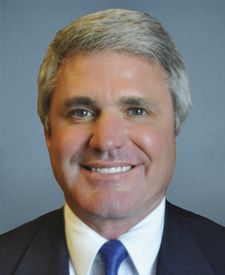
Complete STOCK Act trading history for Rep. Michael T. McCaul (R-TX).
Every filing, 3,405 late disclosures, $57.7M in 2025 volume, and AI signal scores —
sourced from official federal disclosures and cross-referenced against his Foreign Affairs
Committee chairmanship, Homeland Security assignment, bill activity, and campaign contributions.
Live · STOCK Act tracked
Coverage: 2005–presentUpdated May 2026
MM
RRep./Republican/Foreign Affairs Chair
Michael T. McCaul
Texas's 10th District/U.S. House of Representatives
In Congress since 2005/Annual net-worth filing: image-only scan/Spouse: Clear Channel heiress
#1 congressional trader by 2025 dollar volume — $57.7M across 1,008 trades — while chairing House Foreign Affairs. Also holds the largest single-member late-filing count on record: 3,405 disclosures past the 45-day deadline.
Cross-referenced: late filings (gap > 45 days) × House Foreign Affairs roster.
All data from public STOCK Act filings, cross-referenced by GovGreed with committee assignments,
bill activity, and campaign contributions. Updated daily.
We can see every trade — but not what he’s worth
McCaul is widely reported to be among the wealthiest members of Congress, largely through his wife
Linda — a daughter of Clear Channel founder Lowry Mays. But unlike the 450 members
ranked on our Congressional Net Worth leaderboard,
McCaul files his annual financial disclosure as an image-only scan our parser can’t read —
so we don’t assert a net-worth figure from our own data. His transaction reports, the 16,429 trades
below, are machine-readable and tracked to the day. The most prolific trader in Congress is, on paper, one of
the hardest to value.
Section 01 · Trading Overview
Trading Overview
Michael McCaul stock trades have made him the most prolific congressional trader by dollar volume. The Texas Republican and former federal prosecutor has filed approximately 16,429 trades since entering Congress in 2005, placing him second only to Ro Khanna (D-CA) by trade count but first by estimated dollar value. According to GovGreed's analysis of 103,887 STOCK Act filings, McCaul's 2025 trading alone totaled an estimated $57,709,500 across 1,008 trades — more than most members of Congress trade in their entire careers.
McCaul's portfolio spans technology, defense, and energy sectors — areas where his committee assignments as Chairman of the House Foreign Affairs Committee and member of the Homeland Security Committee give him access to classified intelligence briefings, sanctions discussions, and defense procurement information that is not available to ordinary investors. GovGreed's signal scoring engine analyzes McCaul's trades against a composite model that weighs committee alignment, bill correlation, herd detection, and trade timing.
Representative McCaul has accumulated 3,405 documented late filings — trades not disclosed within the legally required 45-day window. That represents 20.7% of his total trades, a rate significantly higher than the congressional average of 12.2%. At a scale of 16,429 total trades, McCaul's late filing count alone exceeds the entire trading history of most members of Congress.
Under the STOCK Act of 2012, members of Congress must publicly disclose all stock transactions within 45 days. Each late filing carries a maximum fine of $200. At 3,405 violations, McCaul's maximum cumulative fines would total $1,334,000 — though this is still a fraction of his annual trading volume. For context: his 2025 trading volume of $57.7 million makes the $200-per-violation penalty structure virtually meaningless as a deterrent.
By the numbers: 3,405 late filings at $200 each = $1,334,000 in maximum fines. McCaul's estimated 2025 trading volume alone was $57,709,500. The penalty amounts to roughly 2.3% of a single year's trading — a cost of doing business, not a deterrent.
Across all of Congress, 12,559 deduplicated trades (12.1%) were filed beyond the 45-day deadline. The average disclosure gap for all 353 trading politicians is 49 days. McCaul's late filing rate of 20.7% is well above this baseline.
Timeline of McCaul's Trading Activity
2005
McCaul enters Congress representing Texas's 10th district. A former federal prosecutor and Chief of Terrorism and National Security for the U.S. Attorney's office in Texas, he begins filing stock trades shortly after taking office.
2013 – 2017
McCaul serves as Chairman of the Homeland Security Committee while maintaining an active trading portfolio. His trading volume grows steadily, with positions spanning technology, defense, and energy sectors.
2019 – 2022
As ranking member and then Chairman of the House Foreign Affairs Committee, McCaul receives classified briefings on international conflicts, sanctions, and arms deals. His trade filings continue to show activity in defense contractors and companies with significant international exposure.
2023 – 2024
McCaul becomes Chairman of the House Foreign Affairs Committee in the 118th Congress. His late filing count surpasses 5,000. Watchdog organizations flag his trading volume as among the highest in Congress.
2025
McCaul files 1,008 trades totaling an estimated $57.7 million — the highest dollar volume of any member of Congress for the year. His cumulative late filing count reaches 3,405, representing 20.7% of his total filings. Multiple proposals to ban congressional stock trading cite trading patterns like McCaul's as evidence that self-policing has failed.
The central concern around McCaul's trading is the intersection with his role as Chairman of the House Foreign Affairs Committee. This committee receives classified intelligence briefings on international conflicts, sanctions policy, arms sales, foreign aid, and geopolitical developments — information that directly affects the stock prices of defense contractors, energy companies, cybersecurity firms, and multinational corporations.
McCaul also served as Chairman of the Homeland Security Committee from 2013 to 2017, where he received classified briefings on domestic security threats, cybersecurity vulnerabilities, and border security spending. The combination of these two committee assignments over his career has given McCaul access to an unusually broad range of classified and market-moving information. GovGreed's signal engine cross-references his trades with committee hearing dates, bill activity, and sector momentum to detect patterns of potential information asymmetry.
Why This Matters
Classified briefings: As Foreign Affairs Chairman, McCaul receives regular classified updates on international conflicts, sanctions, arms deals, and geopolitical intelligence that can move defense and energy markets
Sanctions authority: The committee oversees U.S. sanctions policy, which directly impacts companies doing business with sanctioned nations or entities — McCaul sees sanctions discussions before they become public
Arms sales oversight: Foreign Affairs approves major international arms sales, directly affecting defense contractor revenue and stock prices
Homeland Security overlap: His previous chairmanship of Homeland Security (2013–2017) gave access to cybersecurity threat data, border security spending, and domestic security contracts
GovGreed signal detection: The platform's bill-trade correlation engine analyzes 256,112 correlations across all of Congress to quantify timing patterns between committee activity and trading
GovGreed does not make legal accusations. The data shows a pattern of high-volume trading in sectors where committee assignments create information advantages. Whether any specific trade constitutes illegal insider trading is a legal determination for the SEC and DOJ. GovGreed quantifies these patterns objectively across 256,112 bill-trade correlations covering all of Congress. Not financial advice.
Sector Exposure
McCaul's portfolio is heavily concentrated in technology, defense, and energy — the three sectors most directly affected by his Foreign Affairs and Homeland Security committee assignments. The technology and defense overlap is particularly notable given the committee's oversight of international cybersecurity threats, military aid, and arms sales. Below is a breakdown of his disclosed trades by sector, based on GovGreed's mapping of tickers to GICS sectors.
■■■
Sector Breakdown
Loading sector data...
Disclosure Gap Analysis
The STOCK Act requires trades to be disclosed within 45 days. Across all of Congress,
12,559 deduplicated trades (12.1%) were filed late. The average disclosure gap across the full
database is 49 days. McCaul's filing patterns reveal a persistent transparency problem at scale.
McCaul avg disclosure gap36.8 days
Congress-wide average49 days
McCaul trades filed late (>45 days)3,405 of 16,284 (20.9%)
Longest single disclosure gap632 days
Late filings matter because they extend the information asymmetry window — the period during
which the representative knows his positions but the public does not. For the Chairman of the Foreign Affairs Committee
trading defense and technology stocks, every additional day of non-disclosure represents an informational advantage
that ordinary investors cannot access. GovGreed flags every late filing automatically across all
12,559 late-filed trades in the database.
Frequently Asked Questions
How many stock trades has Michael McCaul made?▼
Representative Michael McCaul (R-TX) has filed approximately 16,429 stock trades since entering Congress in 2005. In 2025 alone, he filed 1,008 trades totaling an estimated $57.7 million, making him the #1 congressional trader by dollar volume. All trades are disclosed through mandatory STOCK Act filings and tracked in GovGreed's database of 103,887 congressional trades across 353 politicians.
What stocks does Michael McCaul trade?▼
McCaul's STOCK Act filings show extensive positions across technology, defense, and energy sectors. His portfolio includes major technology companies, defense contractors that intersect with his Foreign Affairs and Homeland Security committee assignments, and energy stocks reflecting Texas economic interests. The full list of his traded tickers is visible in the table above and on his GovGreed profile page.
Does McCaul violate the STOCK Act?▼
Yes. Representative McCaul has accumulated 3,405 documented late filings — trades not disclosed within the legally required 45-day window. That represents 20.7% of his total trades, well above the congressional average of 12.2%. Under the STOCK Act, each late filing carries a $200 fine. At 3,405 violations, his maximum cumulative fines would total $1,334,000 — though enforcement has been inconsistent. For context: this penalty is roughly 2.3% of his 2025 trading volume alone.
How much did McCaul trade in 2025?▼
In 2025, Michael McCaul filed 1,008 stock trades with an estimated total volume of $57,709,500. This makes him the #1 congressional trader by dollar volume for the year. The volume is estimated from STOCK Act filing amount ranges, which report trades in brackets (e.g., "$50,001 – $100,000"). GovGreed uses the midpoint of each range to estimate total volume. Not financial advice.
Does McCaul trade while on Foreign Affairs?▼
Yes. McCaul serves as Chairman of the House Foreign Affairs Committee, which receives classified intelligence briefings on international conflicts, sanctions, arms deals, and geopolitical developments. He also sits on the Homeland Security Committee. Both assignments provide access to non-public information that can affect the stock prices of defense contractors, cybersecurity firms, and companies with international exposure. GovGreed's signal engine cross-references his trades with committee activity and bill timelines to detect potential information asymmetry. Not financial advice.
Is McCaul the most active trader in Congress?▼
McCaul is the #1 congressional trader by dollar volume, with $57.7 million in estimated trading volume in 2025 alone. By trade count, Ro Khanna (D-CA) leads with 24,822 trades across 1,378 tickers. McCaul's 16,429 trades place him second by count but first by estimated dollar value. His trading frequency and volume are extraordinary even by congressional standards — he files an average of roughly 1,600 trades per year over his tenure.
How to track Michael McCaul's stock trades?▼
Track McCaul's trades through GovGreed's free dashboard, which aggregates all STOCK Act filings daily from the House Financial Disclosure system. GovGreed cross-references each trade with committee assignments, bill activity, campaign contributions, and lobbying data to generate a composite signal score. Set up alerts to be notified when new McCaul filings appear. The database covers 103,887 trades from 353 politicians across 14 years (2012–2026).
How does McCaul compare to Pelosi?▼
McCaul and Pelosi are both high-profile congressional traders, but their styles differ significantly. McCaul trades at far higher volume — 16,429 trades vs. Pelosi's smaller number of larger, more targeted positions. Pelosi is known for well-timed options trades (notably NVIDIA and other tech names before the CHIPS Act), while McCaul's pattern is high-frequency diversified trading across technology, defense, and energy sectors. McCaul's 3,405 late filings (20.7%) also significantly exceed both Pelosi's late filing rate and the congressional average of 12.2%. See Pelosi's full trade history for comparison. Not financial advice.
See interactive charts, signal scores, sector drilldowns, and trade-by-trade analysis with real-time alerts the moment a disclosure crosses the 45-day STOCK Act deadline.
Top 10 signals + 10 AI questions a day on the free tier · Founders locked at $24.50/mo forever
About This Data:
Statistics sourced from Congress.gov, SEC EDGAR, FEC, and Senate LDA via official APIs.
Database: 103,887 trades, 353 politicians, 14 years (2012–2026).
Updated daily. Not financial advice. All data from public federal disclosures.