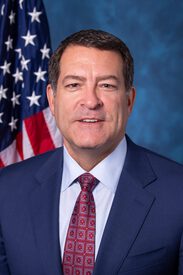
Rep. Mark Green (R-TN7) — Iraq War combat surgeon turned Chair of the
House Homeland Security Committee — has filed 611 STOCK Act
disclosures totaling approximately $94.5M across just 39 unique tickers
since taking office in 2019. That's roughly $2.4M per ticker on average, one of the
most concentrated big-position portfolios in Congress. Net buyer pattern: 442 purchases against
169 sales, plus 1 rare disclosed put option.
Live · STOCK Act tracked
Coverage: 2019–presentVerified 2026-05-25
MG
RRep./Republican/Chair, House Homeland Security
Mark Green
Tennessee's 7th District · Middle Tennessee/U.S. House of Representatives
In Congress since 2019/Iraq War combat surgeon/Founded Align MD
The Iraq War combat surgeon who chairs House Homeland Security — and runs one of Congress's most concentrated big-position portfolios. $94.5M across just 39 tickers ($2.4M per ticker average). Net buyer with 1 rare disclosed put option. Conviction trading at scale, not broker-managed diversification.
Cross-referenced: 103,887 STOCK Act filings × DHS contract calendar × House Homeland Security markup schedule
—
Trades Filed
—
Unique Tickers
—
Est. Volume
~$2.4M
Avg per Ticker
highly concentrated
1
Put Option Disclosed
rare bearish bet
HSC Chair
Committee Role
Homeland Security
Sector Exposure · Across just 39 tickersConcentrated · defense + healthcare leaning
All data from public STOCK Act filings, cross-referenced by GovGreed with committee assignments,
bill activity, and campaign contributions. Updated daily.
Section 01 · Trading Overview
Trading Overview
Mark Green stock trades stand out for two reasons: size — ~$94.5M in disclosed band volume, the 9th-largest in GovGreed's deduplicated database and the third-highest of any House Republican on record (behind Michael McCaul and Jefferson Shreve, verified August 27, 2026) — and concentration: just 39 tickers, with 272 of his 611 filings in oil & gas midstream (pipelines). He chaired the House Homeland Security Committee until resigning from Congress in July 2025.
According to GovGreed's analysis of 103,887 deduplicated STOCK Act filings from 353 politicians, Green's record is the opposite of broker-managed diversification: 611 filings compressed into 39 tickers (21 of them listed companies; the rest municipal bonds and Treasuries). The industry mix is unambiguous — oil & gas midstream (272 filings), oil & gas equipment & services (51), regulated gas (14), and refining (12): roughly 57% of every filing he made sits in the oil & gas complex. GovGreed's signal scoring engine cross-references each trade with committee assignments, bill activity, campaign contributions, and lobbying data.
The 9th-Largest Disclosed Dollar Volume in Congress
Green ranks 9th in Congress by disclosed dollar volume (verified August 27, 2026) with a filing count — 611 — that is a fraction of what high-frequency filers like Ro Khanna (24,991 trades) and Michael McCaul (16,488 trades) put up. The math is the story: ~$94.5M across 611 filings works out to roughly $155,000 in band midpoint per filing, in a Congress where the most common disclosure band is $1,001–$15,000. Big positions, few names, personally sized.
Of Green's 611 filings, GovGreed counts exactly one disclosed options position: 13 SPY $440 puts bought July 11, 2023, and sold August 4, 2023 — a brief bearish bet on the index, closed within a month. Everything else is spot transactions, and the flow leans heavily to accumulation: 442 purchases against 169 sales, a 72% buy ratio.
Dollar volume context: Green's ~$94.5M in disclosed lifetime trading (band midpoints; the disclosed range is $56.2M–$132.8M) ranks 9th in GovGreed's deduplicated database and third among House Republicans on record, behind Michael McCaul and Jefferson Shreve (verified August 27, 2026). Congress discloses dollar bands, never exact amounts — every figure on this page is a band or a band total.
For comparison: Khanna files roughly 41× Green's count in mostly small broker-managed increments, and Pelosi's household files fewer, larger single-stock positions. Green's shape is different from both: a short list of energy names, bought repeatedly, in large bands — the profile of personally directed conviction accumulation rather than delegated portfolio rotation.
Section 03 · Homeland Security × Pipelines
The Homeland Security Chair Whose Portfolio Was Pipelines
Mark Green chaired the House Homeland Security Committee — the panel with jurisdiction over DHS, CISA, and the security of critical infrastructure, a category that includes the nation's pipeline network. He also served on House Foreign Affairs. Committee jurisdiction is a standing fact about what a committee oversees, not evidence that any trade was timed to it — GovGreed states the overlap and stops there.
His STOCK Act filings show what the overlap actually was: 272 of his 611 deduplicated filings — 45% — are purchases and sales of oil & gas midstream companies, the pipeline operators whose physical security falls under homeland-security policy. Add oil & gas equipment & services (51 filings), regulated gas (14), and refining (12), and roughly 57% of his entire disclosure record sits in the energy complex, concentrated in a handful of names held in large bands.
Why This Matters
Concentration: ~$94.5M across just 39 tickers — roughly $2.4M of disclosed band volume per name, the opposite of broker-managed diversification
272 midstream filings: nearly half his entire record is pipeline companies, bought repeatedly in large bands over five years
Committee overlap: as Homeland Security chair he oversaw critical-infrastructure security policy, which covers pipelines — a standing fact, not evidence of timing
Net buyer: 442 purchases against 169 sales (72% buys) — accumulation, not liquidation
Record closed: Green resigned from Congress in July 2025; his final disclosed trade is dated February 28, 2025
GovGreed signal detection: The platform's bill-trade correlation engine analyzes 440,806 correlations to detect timing patterns around Green's trades
GovGreed does not make legal accusations. The data shows a structural overlap: the chair of the committee that oversees critical-infrastructure security held ~$94.5M of disclosed band volume concentrated in pipeline and energy names. Whether any specific trade constitutes illegal insider trading is a legal determination for the SEC and DOJ. GovGreed quantifies these patterns objectively across 440,806 bill-trade correlations covering all of Congress. Not financial advice.
Sector Exposure
Green's 611 deduplicated filings span just 39 tickers, with an overwhelming energy
overweight: 57% of his record sits in the oil & gas complex, led by 272 midstream
(pipeline) filings. The chart below ranks sectors by trade count. Sector mapping uses GovGreed's
GICS classification.
Strategic Profile
Green chaired the House Homeland Security Committee and served on Foreign Affairs until resigning
from Congress in July 2025. Below is GovGreed's AI-composed strategic dossier mapping his ~$94.5M /
611-filing record against committee assignments, donor industries, and active legislation.
Disclosure Gap Analysis
The STOCK Act requires trades to be disclosed within 45 days. Across all of Congress,
12,559 deduplicated trades (12.1%) were filed late. The median disclosure gap across
the full database is 28 days (average: 49). Here is how Green's filing patterns compare.
Green avg disclosure gap—
Congress-wide average49 days
Green trades filed late (>45 days)—
Longest single disclosure gap—
Late filings matter because they extend the information asymmetry window — the period during
which the representative knows his positions but the public does not. Green's own record is clean by congressional standards —
7 of 611 filings late (1.1%), a fraction of the 12.1% congressional rate. GovGreed still flags
every late filing automatically across all
12,559 late-filed trades in the database.
Frequently Asked Questions
How many stock trades has Mark Green made?▼
Representative Mark Green (R-TN7) filed 611 deduplicated STOCK Act disclosures totaling around $94.5 million in band midpoints across just 39 tickers — the 9th-largest disclosed dollar volume in Congress and the third-highest of any House Republican on record (verified August 27, 2026). His filings break down to 442 purchases and 169 sales, plus one brief SPY put position in 2023. All trades are disclosed through mandatory STOCK Act filings and tracked in GovGreed's database of 103,887 deduplicated congressional trades from 353 politicians.
Why is Mark Green's stock trading controversial?▼
Because of the overlap between his committee and his portfolio: Green chaired the House Homeland Security Committee — whose jurisdiction includes the security of critical infrastructure such as pipelines — while 272 of his 611 filings were purchases and sales of pipeline (oil & gas midstream) companies, held in large bands. Committee jurisdiction is a standing fact, not evidence of timing, and GovGreed reports it that way. The concentration itself — ~$94.5M in 39 names — is what makes the record unusual.
What stocks does Mark Green trade?▼
Green's STOCK Act filings show positions across just 39 tickers (21 of them listed companies; the rest municipal bonds and Treasuries). The record is dominated by the oil & gas complex: midstream/pipelines (272 filings), equipment & services (51), regulated gas (14), and refining (12). The full sector breakdown is visible in the chart above and the trade table.
Is Mark Green on the House Financial Services Committee?▼
No. Green chaired the House Homeland Security Committee and served on the House Foreign Affairs Committee until resigning from Congress in July 2025. He was never a House Financial Services member. The homeland-security seat is the relevant one for his record: its jurisdiction covers critical-infrastructure security, including the pipeline network where his portfolio concentrated.
Does Mark Green trade options?▼
Essentially no. Across 611 deduplicated filings there is a single disclosed options position: 13 SPY $440 puts bought July 11, 2023, and sold August 4, 2023 — a brief bearish index bet, closed within a month. Everything else in his record is spot stock and fixed-income transactions.
How does Green compare to other top traders in Congress?▼
By count, Green is nowhere near the high-frequency filers — 611 filings versus Ro Khanna's 24,991 or Michael McCaul's 16,488. By dollars, he ranks 9th in all of Congress and 3rd among House Republicans (verified August 27, 2026). That inversion — few filings, huge bands — is the signature of personally directed conviction positions rather than broker-managed churn.
How to track Mark Green's stock trades?▼
Track Green's trades through GovGreed's free dashboard, which aggregates all STOCK Act filings daily from the House Financial Disclosures system. GovGreed cross-references each trade with committee assignments, bill activity, campaign contributions, and lobbying data to generate a composite signal score. Set up alerts to be notified when new Green filings appear. The database covers 103,887 trades from 353 politicians across 14 years (2012–2026).
Has Mark Green violated the STOCK Act?▼
Green's late-filing rate is approximately 1.1% — 7 of his 611 deduplicated filings past the 45-day deadline, far below the congressional average of 12.1%. The STOCK Act of 2012 requires disclosure within 45 days; late filings carry a $200 fine per violation. Across all of Congress, 12,559 deduplicated trades (12.1%) were filed late. GovGreed tracks the data objectively and does not make legal accusations. Not financial advice.
Top 10 signals + 10 AI questions a day on the free tier · Founders locked at $24.50/mo forever
About This Data:
Statistics sourced from Congress.gov, SEC EDGAR, FEC, and Senate LDA via official APIs.
Database: 103,887 trades, 353 politicians, 14 years (2012–2026).
Updated daily. Not financial advice. All data from public federal disclosures.