The Pelosi Options Machine
In January 2025, Nancy Pelosi bought call options on five companies at once — the chips, the clouds, the power and the AI diagnostics — all set to expire the same day. When that day came a year later, she didn't cash them out — she exercised all five into shares. Because the calls were already deep in the money, the built-in value gained 105% on Nvidia and 354% on Google, while the biggest leg of the five quietly lost money. And it isn't the first time: the same shape of trade runs back to at least 2019.
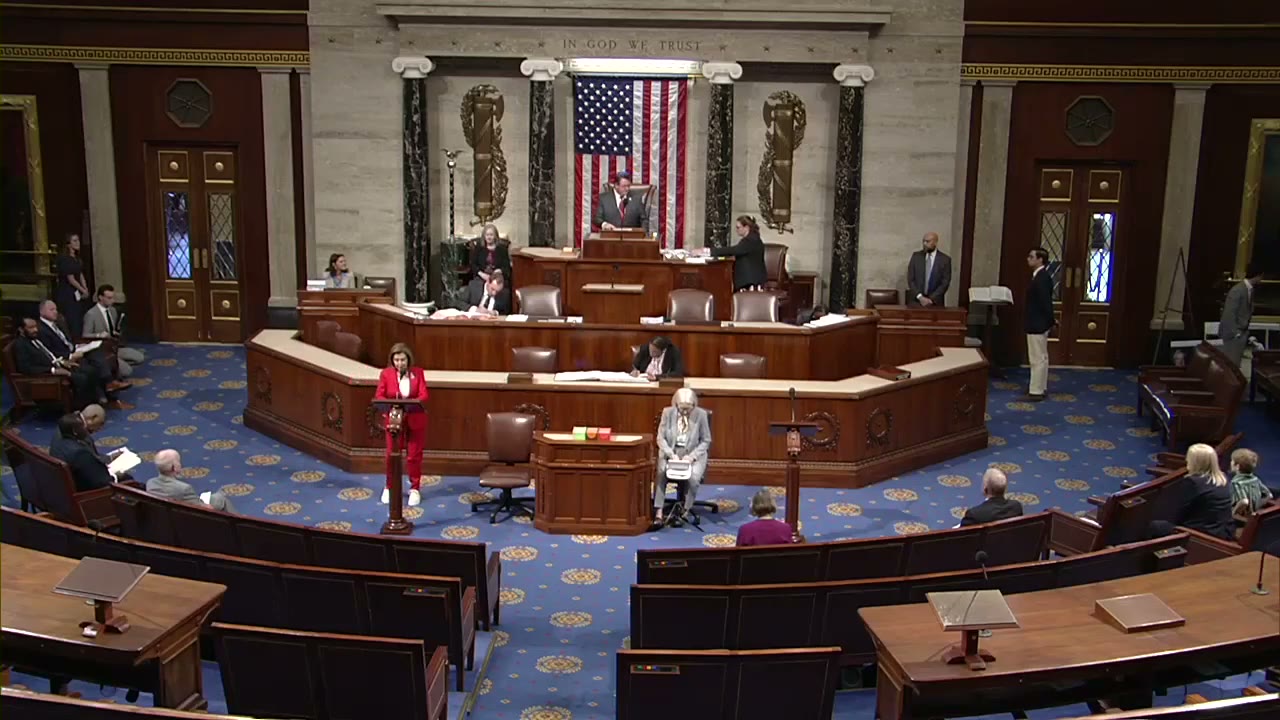
On January 14, 2025, Nancy Pelosi (D-CA) bought 50 call options each on five companies — Nvidia ($80 strike), Amazon ($150), Google ($150), Vistra ($50) and Tempus AI ($20) — all expiring January 16, 2026. A year later she exercised all five into stock — 5,000 shares of each, 25,000 in all — rather than selling. The five names trace the AI trade end to end: the chips, the two clouds, the power generator that feeds the data centres, and an AI health-diagnostics company. Because the calls were deep in the money, the option's built-in value moved far more than the underlying stock — in both directions. Nvidia's stock rose 41.4% while the option's intrinsic value rose 105.2%; Google's stock rose 74.0% while the option gained 354%. The largest leg was not a winner: Vistra, the only position in the batch disclosed at $500,001–$1,000,000, fell 2.3% and its built-in value lost 3.2%. The Amazon and Tempus legs are reported qualitatively only — the price history has genuine coverage gaps around the buy date. The structure is not a one-off: GovGreed's disclosure records show the same deep-in-the-money, long-dated call strategy running back to at least 2019. The leverage math is a mechanical property of the instrument, not evidence of foreknowledge; this paper documents the scale and the repetition.
- Key findings
- On January 14, 2025, Pelosi bought 50 call options each on five companies — Nvidia ($80 strike), Amazon ($150), Google ($150), Vistra ($50) and Tempus AI ($20) — all expiring January 16, 2026.
- On January 16, 2026 she exercised all five into 5,000 shares each — a conversion into stock, not a sale (25,000 shares in all).
- Nvidia's stock rose 41.4% while the option's built-in value rose 105.2%; Google's stock rose 74.0% while the option's built-in value rose 354%.
- The largest leg lost money. Vistra — the only position disclosed at $500,001–$1,000,000 — fell 2.3%, and its built-in value fell 3.2%. The leverage cuts both ways.
- On December 30, 2025 — sixteen days before exercising — she opened the next round: fresh calls on Nvidia, Amazon, Google, and Apple (first time), expiring January 2027.
- The same deep-in-the-money, long-dated call structure appears in GovGreed's records back to at least 2019.
1. One buy date, one expiration, the whole AI stack
If you only read the one-line disclosure, you would see “50 call options, exercised.” That undersells what actually happened. On January 14, 2025, Nancy Pelosi (D-CA) bought 50 call options each on five companies: Nvidia at an $80 strike, Amazon and Google at $150, Vistra at $50, and Tempus AI at $20. All five carried the same expiration: January 16, 2026. These are long-dated calls — a full year of runway — and every one of them was already deep in the money on the day she bought it, with the stock trading well above the strike from the start.
Read the five together and they are not a grab bag of large caps. They are a supply chain. Nvidia builds the chips. Amazon and Google rent out the compute. Vistra is a power generator — the electricity that runs the data centres, and the leg she sized largest. Tempus AI sells AI diagnostics into hospitals. One buy date, one expiration, and a position in every layer of the same trade.
A year later, on the expiration date, she had a choice: let them lapse, sell them for cash, or exercise. Her disclosures say she exercised all five. Exercising converts each contract into 100 shares, so fifty contracts became 5,000 shares of each company — 25,000 shares in all, a conversion into stock rather than a sale.
2. Data and methodology
Every number here traces to a public federal record. The buy dates, strikes, contract counts, and the exercise language come from Pelosi's own filed Periodic Transaction Reports under the STOCK Act. The January 2025 and January 2026 closing prices come from GovGreed's daily price history; a call option's “intrinsic value” is simply the close minus the strike. The seven-year options history is the same disclosure feed, queried across every options trade she has reported. All figures were verified as of June 29, 2026.
Two deliberate omissions: we leave out percentages for the Amazon and Tempus AI legs. GovGreed's daily price history has a genuine coverage gap for Amazon around January 14, 2025, and holds no price history at all for Tempus. We would rather show three numbers we can stand behind than invent two more to round out the set. Both legs are disclosed here in full — contract count, strike, expiration and exercise — with the percentage left blank.
3. The receipts: the leverage amplifies losses too
A deep-in-the-money call moves close to dollar-for-dollar with the stock, but that dollar is measured against a much smaller starting base — the intrinsic value — so the percentage swing is amplified. Nvidia's stock rose from $131.76 to $186.23, a 41.4% gain; the option's built-in value went from $51.76 to $106.23 a share, a 105.2% gain. Google's stock rose from $189.66 to $330.00, up 74.0%; its option's built-in value went from $39.66 to $180.00 a share, up 354%.
The same mechanism ran in reverse on the leg she sized biggest. Vistra slipped from $170.51 to $166.60 over the year — down 2.3% — and the option's built-in value went from $120.51 to $116.60 a share, a 3.2% loss. It is the only position in the batch disclosed in the $500,001–$1,000,000 bracket, twice the size of the Nvidia and Google legs. The power leg of the AI trade was the largest bet and the worst outcome. Table 1 lays out all five.
Table 1 · All five legs — stock move vs. option built-in value| Ticker | Strike | Disclosed bracket | Stock 1/14/25 | Stock 1/16/26 | Stock return | Option built-in value |
|---|---|---|---|---|---|---|
| NVDA | $80 | $250K–$500K | $131.76 | $186.23 | +41.4% | +105.2% |
| GOOGL | $150 | $250K–$500K | $189.66 | $330.00 | +74.0% | +354% |
| VST | $50 | $500K–$1M | $170.51 | $166.60 | −2.3% | −3.2% |
| AMZN | $150 | $250K–$500K | Price-data coverage gap around Jan 14, 2025 — qualitative only, no percentage. | |||
| TEM | $20 | $50K–$100K | No price history for Tempus AI in GovGreed's series — qualitative only, no percentage. | |||
Same 50-contract structure and Jan 16, 2026 expiration on all five legs; all five exercised into 5,000 shares each. Option built-in (intrinsic) value = closing price − strike; percentages compare the built-in value on the buy date to the built-in value at exercise. Brackets are the disclosed ranges on the January 14, 2025 option purchases. Prices are disclosed daily closes from GovGreed's price history. Verified July 15, 2026. Full history on the member page.
A note on the two unmeasured legs: Pelosi bought the same 50-call structure on Amazon ($150 strike) and Tempus AI ($20 strike) that day, expiring on the same date, and exercised both alongside the other three. We leave their percentages out on purpose — GovGreed's daily price history has a genuine coverage gap for Amazon around January 14, 2025, and no price history at all for Tempus. We would rather show three numbers we can stand behind than invent two more.
4. The pattern: the next round opened before the last one matured
This is where a single well-timed trade starts to look like a routine. On December 30, 2025 — sixteen days before she exercised the 2025 calls — Pelosi opened a fresh set: new long-dated calls on Nvidia, Amazon, and Google again, plus Apple for the first time, all expiring in January 2027. She rolled into the next expiration before the last one even matured.
Pull the full history and the rhythm is unmistakable. GovGreed's records of her options trades run back to at least 2019, on a rotating list of the market's largest companies: Salesforce, Netflix, Microsoft, Tesla, Disney, American Express, PayPal, Nvidia, Micron, Roblox, Palo Alto Networks, Broadcom, and now again Google, Amazon, and Apple. The shape is the same every time — buy long-dated, deep-in-the-money calls, let the leverage compound over a year or more, and roll into the next set before the current one expires.
5. Discussion
Seven years of the same structure, applied to a rotating list of the biggest companies in the market — that is the story here, the scale and the repetition, not any single trade. The leverage is a mechanical property of the instrument, and the systematic repetition is what the public record documents. A one-line disclosure hides both: the year-long leverage and the rotation into the next set before the last one clears.
6. Limitations and caveats
The leverage math is a mechanical property of deep-in-the-money, long-dated calls. The exact same percentages would apply to any investor who held the identical position. Nothing on this page says Pelosi knew where Nvidia or Google was headed, and nothing here is an accusation of insider trading. Vistra is the direct evidence for that reading: the leg she sized largest is the one that lost. The Amazon and Tempus legs are left without percentages on purpose, because the price data around the buy date has real gaps. This paper measures three of five legs; the two it cannot measure are disclosed in full.
7. Conclusion
The one-line disclosure — “50 call options, exercised” — hides a year-long, five-name leverage strategy across every layer of the AI trade, converted into 25,000 shares, and a rotation that has been running since at least 2019. No single trade has to be sinister for that to matter, and not every leg even worked: the biggest one lost. The instrument does the amplifying; the disclosures do the documenting. What is unusual is not any one call, but that the same machine keeps running.
Data availability
Primary sources. The option buys, strikes, contract counts, exercise language, and dates come from Pelosi's congressional Periodic Transaction Reports (STOCK Act). Closing prices come from the daily_prices reference; the built-in (intrinsic) value is the close minus the strike. The seven-year options history is the same disclosure feed, queried across every reported options trade.
Derived dataset. The stock returns, built-in-value gains, and the exercise share counts are reproducible from the member's trade history and the price series on the platform. A machine-readable export is available on request — see “Sourcing this for a story?” below.
Reproducibility & verification
This is an independent working paper. Produced by GovGreed Research; not externally peer-reviewed. The Nvidia, Google and Vistra closing prices, the +41.4%, +74.0% and −2.3% stock returns, the +105.2%, +354% and −3.2% built-in-value changes, the five-leg composition of the January 14, 2025 batch, the 5,000-shares-each exercise of all five legs, and the 2019-onward history were re-derived live and verified as of July 15, 2026. The Amazon and Tempus AI legs are disclosed without percentages because of real price-data coverage gaps.
Known data limitation. Two of the five legs cannot be measured from GovGreed's price history: daily_prices holds only 26 rows for Amazon between June 2024 and December 2025, and no rows at all for Tempus AI. This is a gap in our own price coverage, not in the congressional disclosure record — both legs are fully disclosed in Pelosi's filings. Backfilling those series is tracked as a data task; if it lands, this paper gets a v1.2 with the two missing percentages.
Conflict of interest & funding
GovGreed is a commercial congressional-trading-intelligence platform; GovGreed Research is its analysis function. This paper received no external funding, and Rep. Pelosi was given no prior review. It uses only public federal records and is released free to read, quote, and reproduce under CC BY 4.0 with attribution. Nothing here alleges wrongdoing. The leverage is a mechanical property of the instrument — the same percentages would apply to any investor holding the identical position — and the paper makes no claim of foreknowledge. The finding is the scale of the positions and the systematic repetition of the strategy, both visible in filings she was legally required to submit.
Revision history
v1.1 · 2026-07-15 — Correction. v1.0 reported the January 14, 2025 batch as three legs (Nvidia, Amazon, Google) exercised into 15,000 shares. The disclosure record shows five: the same 50-contract, same-expiration structure was also bought on Vistra ($50 strike) and Tempus AI ($20 strike), and all five were exercised on January 16, 2026 — 25,000 shares, not 15,000. The omission ran in our own favour, which is why it matters: Vistra was the largest position in the batch (the only leg disclosed at $500,001–$1,000,000) and it lost money (−2.3% stock, −3.2% built-in value), so v1.0 published only the two winning legs and a share count 40% below the record. This version adds both legs, the disclosed brackets, the Vistra loss, and reframes the batch as a position across the full AI stack rather than "three of the biggest names in tech." Headline gains for Nvidia (+105.2%) and Google (+354%) are unchanged and re-verified. Found in an internal audit against the primary filings, not reported externally.
v1.0 · 2026-07-01 — Initial publication. Option legs, exercise, built-in-value math, and the 2019-onward history derived live and verified as of June 29, 2026.
Frequently asked
Sourcing this for a story?
Free to use in a thread, article, or video — just credit GovGreed with a link to this page. Want the full options history, the leg-by-leg price math, or every options trade Pelosi has reported since 2019? Email govgreed@gmail.com — usually 24–48h, free with a link credit.
References & data sources
- STOCK Act disclosures — Pelosi's congressional Periodic Transaction Reports, in GovGreed's Congress database; full history on her member page.
- Daily closing prices — Nvidia and Google closes on Jan 14, 2025 and Jan 16, 2026, from GovGreed's price history; intrinsic value = close − strike.
- Options history — the same disclosure feed, queried across every options trade Pelosi has reported back to at least 2019.
- Companion papers — The Greediness Index · The Goldman Rebuild.
Keep pulling the thread
See the receipts — free
Every disclosure, scored against the bills a member votes on, the sectors they trade, and the herds that follow. Free account: today’s top 10 signals + predictions. No card required.
Not financial advice. All data from public federal disclosures.