The Goldman Rebuild
Sen. David McCormick — a member of the Senate Banking Committee — fully exited a Goldman Sachs position worth $1 million to $5 million in January 2026. A month later he began rebuilding it, one purchase at a time. The very first buy landed the same day a lobbying filing reported $300,000 spent on Dodd-Frank — the law his committee oversees. GovGreed's model scored the trade 91.54, the highest it has ever produced.
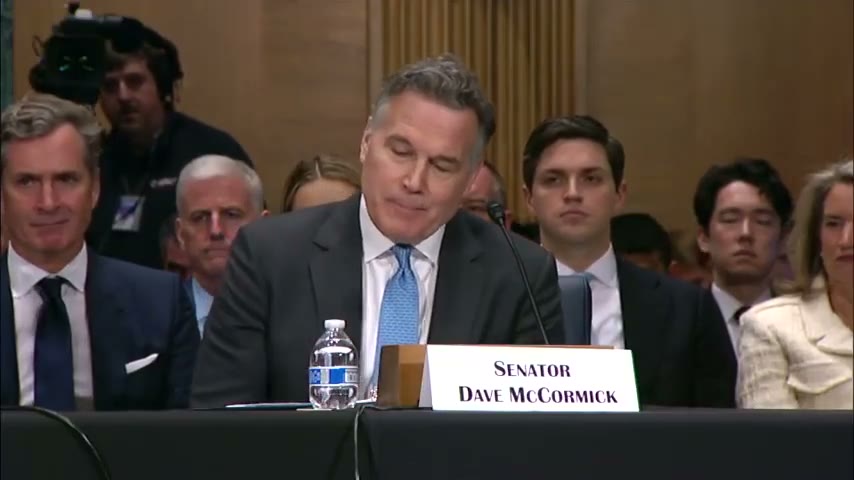
Sen. David McCormick (R-PA), a member of the Senate Committee on Banking, Housing, and Urban Affairs, fully sold a Goldman Sachs position worth $1 million to $5 million on January 23, 2026, then rebuilt it across seven separate purchases — February 23, 24, 25, March 3, March 10, May 27, and June 2 — each in the $100,001–$250,000 bracket, for a combined disclosed range of $700,007 to $1,750,000. The first purchase landed the same day a lobbying filing reported $300,000 on implementation of P.L. 111-203, the Dodd-Frank Act — the law his committee oversees; the average lobbying-to-trade gap was 5.2 days. GovGreed's model scored the trade 91.54 — S tier, PERFECT_STORM convergence, the highest master score it has produced — on the Committee-Trader and Lobbying-Influence signals. This is a structural-overlap finding: nothing here is illegal, and Goldman's stock rose broadly across the market all year.
- Key findings
- On January 23, 2026, McCormick fully sold a Goldman Sachs position worth $1M–$5M — out of the stock entirely.
- He rebuilt it across seven purchases (Feb 23, 24, 25; Mar 3, 10; May 27; Jun 2), each $100,001–$250,000 — a combined disclosed range of $700,007–$1,750,000.
- The first buy landed the same day, Feb 23, 2026, a lobbying filing reported $300,000 on Dodd-Frank implementation; the average filing-to-trade gap was 5.2 days.
- McCormick sits on the Senate Committee on Banking, Housing, and Urban Affairs — the panel with jurisdiction over Dodd-Frank.
- GovGreed's model scored the trade 91.54 (S tier, PERFECT_STORM) — its highest ever — on the Committee-Trader and Lobbying-Influence signals.
1. A clean exit, then a methodical rebuild
On January 23, 2026, Sen. David McCormick (R-PA) fully sold a Goldman Sachs position worth $1 million to $5 million. It is worth stating plainly, because it is the honest context for everything that follows: he was out of the stock entirely. A month later he began buying it back — not in one lump, but across seven separate disclosed purchases: February 23, 24, and 25, then March 3 and March 10, and finally May 27 and June 2. Each landed in the same $100,001-to-$250,000 bracket. Combined, the disclosed range on the rebuilt position runs $700,007 to $1,750,000.
This paper asks a narrow, checkable question: what did the rebuild line up with? The answer is a committee seat, a lobbying filing, and a public law — all pointing at the same bank.
2. Data and methodology
Every figure here is drawn from public federal records. The January sale and all seven purchase dates, dollar brackets, and the ticker come from McCormick's own filed Periodic Transaction Reports under the STOCK Act. Every Goldman Sachs closing price on his entry dates, and the June 29, 2026 close, come from GovGreed's daily price history. The $300,000 Dodd-Frank lobbying filing, its date, and the 5.2-day average gap from filing to trade are recorded in GovGreed's lobbying-pattern data drawn from Senate LDA filings. His seat on the Senate Committee on Banking, Housing, and Urban Affairs comes from committee assignments. The composite 91.54 score is produced by GovGreed's seven-layer signal model.
Two cautions. Blended and per-tranche returns are computed on disclosed closing prices, not on the member's actual fills, which fall inside a bracket rather than at a single number. And the paper-gain range is bounded by the disclosed dollar brackets, not a precise cost basis. We measure the overlap and the price move; we do not allege intent.
3. The overlap: the committee, the law, and the bank
McCormick sits on the Senate Committee on Banking, Housing, and Urban Affairs — the panel with direct jurisdiction over Dodd-Frank and the banks it regulates. On February 23, 2026, a lobbying filing reported $300,000 spent on the “implementation of P.L. 111-203, the Dodd-Frank Wall Street Reform and Consumer Protection Act, and other issues related to the financial services industry.” That is a specific, verifiable public-law citation, not a vague description. The same day, McCormick made the first of his seven Goldman purchases.
That three-way overlap — a committee seat over the industry, a trade in the industry's flagship bank, and the industry's own lobbyists filing on the industry's core law — is what GovGreed's engine is built to catch. It scored this trade 91.54: S tier, PERFECT_STORM convergence, the highest master score the model has ever produced on any trade. Two signals fired — Committee-Trader (he sits on the committee that regulates the sector) and Lobbying-Influence (the trade tracks the industry's lobbying activity).
4. The receipts: seven entries, one climbing stock
Goldman Sachs closed at an average of $924.77 across McCormick's seven entry points. By June 29, 2026, it closed at $1,020.21 — a blended gain of just over ten percent on the full position, and better than fifteen percent on the five earliest purchases alone, the ones made before the stock's biggest run. Table 1 lays out every entry.
Table 1 · The January sale and the seven-purchase rebuild| Date | Action | Disclosed bracket | GS close | Note |
|---|---|---|---|---|
| Jan 23, 2026 | Full sale | $1M–$5M | — | Out of the stock entirely (context) |
| Feb 23, 2026 | Buy #1 | $100,001–$250,000 | $892.31 | Same day as the $300K Dodd-Frank filing · first five |
| Feb 24, 2026 | Buy #2 | $100,001–$250,000 | $902.27 | First five |
| Feb 25, 2026 | Buy #3 | $100,001–$250,000 | $921.38 | First five |
| Mar 3, 2026 | Buy #4 | $100,001–$250,000 | $862.58 | First five |
| Mar 10, 2026 | Buy #5 | $100,001–$250,000 | $833.81 | Last of the first five, before the run |
| May 27, 2026 | Buy #6 | $100,001–$250,000 | $996.47 | — |
| Jun 2, 2026 | Buy #7 | $100,001–$250,000 | $1,064.58 | — |
Average entry across all seven buys: $924.77; across the first five alone: $882.47. Latest close (Jun 29, 2026): $1,020.21 — blended +10.3% on all seven, +15.6% on the first five. Prices are disclosed daily closes. Verified June 29, 2026. Look up the trade on the member page.
Applied to the disclosed dollar range, that puts the unrealized paper gain on the rebuilt position somewhere between $72,000 and $180,000 as of June 29.
5. Discussion
The rebuild is notable less for its return than for its shape. A member sold out of a bank entirely, then re-entered it seven times, with the first entry synchronized to the day the industry's lobbyists filed paperwork on the exact law his committee governs. None of that requires a theory of intent to be worth documenting: the overlap between oversight, lobbying, and ownership is visible in the public record on its own. It is also the reason the pattern recurs — a committee seat conveys both influence over an industry and a vantage point on it, and the disclosures keep showing members holding the industries they regulate.
6. Limitations and caveats
This is the part to read slowly. Nothing here says McCormick knew Goldman Sachs would rise, and nothing here is an accusation of insider trading. Goldman's stock climbed broadly across the market all year, regardless of who was buying it, and none of these trades is illegal. The honest context includes the January sale: he was fully out before he rebuilt, and omitting that would misrepresent the record.
7. Conclusion
Strip the trade to its bones and three public facts sit on top of one another: a Banking Committee seat, a $300,000 lobbying filing on Dodd-Frank, and a seven-part rebuild of a Goldman Sachs stake that began the same day. No single purchase has to be improper for the overlap to matter. It is the second time the model has drawn the same shape around the same senator — and it is exactly the kind of structural conflict the congressional-trading-ban debate is about.
Data availability
Primary sources. The January sale and the seven purchases (dates, dollar brackets, ticker) come from McCormick's congressional Periodic Transaction Reports (STOCK Act). Goldman Sachs closing prices come from the daily_prices reference. The $300,000 Dodd-Frank filing and the 5.2-day filing-to-trade gap come from GovGreed's lobbying_patterns over Senate LDA filings. Committee membership comes from committee_assignments. The 91.54 composite comes from signal_scores.
Derived dataset. The entry-price table, blended and first-five returns, and the paper-gain range are reproducible from the member's trade history and the price series on the platform. A machine-readable export is available on request — see “Sourcing this for a story?” below.
Reproducibility & verification
This is an independent working paper. Produced by GovGreed Research; not externally peer-reviewed. The seven entry prices, the $924.77 and $882.47 averages, the $1,020.21 close, the +10.3% and +15.6% blended gains, the 5.2-day lobbying gap, and the 91.54 score were re-derived live on the publication date and verified as of June 29, 2026.
Conflict of interest & funding
GovGreed is a commercial congressional-trading-intelligence platform; GovGreed Research is its analysis function. This paper received no external funding, and Sen. McCormick was given no prior review. It uses only public federal records and is released free to read, quote, and reproduce under CC BY 4.0 with attribution. Nothing here alleges wrongdoing. None of these trades is illegal, the stock rose broadly across the market all year, and we make no claim that McCormick had non-public information — the finding is the structural overlap of committee, lobbying, and ownership, and the fact that it is the second time the model has caught the same shape around the same senator.
Revision history
v1.0 · 2026-07-01 — Initial publication. Trade record, entry prices, lobbying timing, and the 91.54 score derived live and verified as of June 29, 2026.
Frequently asked
Sourcing this for a story?
Free to use in a thread, article, or video — just credit GovGreed with a link to this page. Want the full trade-by-trade export, the lobbying-filing detail, or McCormick's committee-by-sector breakdown? Email govgreed@gmail.com — usually 24–48h, free with a link credit.
References & data sources
- STOCK Act disclosures — McCormick's congressional Periodic Transaction Reports, in GovGreed's Congress database; full history on his member page.
- Senate lobbying filings (LDA) — the $300,000 Dodd-Frank filing and the 5.2-day filing-to-trade gap, recorded in GovGreed's lobbying-pattern data.
- Committee assignments — McCormick's seat on the Senate Committee on Banking, Housing, and Urban Affairs, the panel with Dodd-Frank jurisdiction.
- Daily closing prices — Goldman Sachs closes on each entry date and the June 29, 2026 close, from GovGreed's price history.
- Signal model — the 91.54 composite (S tier, PERFECT_STORM) from GovGreed's seven-layer master score. How the scoring works.
- Companion papers — The Committee Advantage · The Pelosi Options Machine.
Keep pulling the thread
See the receipts — free
Every congressional trade, scored against the committees, lobbyists, and bills behind it. Free account: today’s top 10 signals + predictions. No card required.
Not financial advice. All data from public federal disclosures.