The Defense Winners
You don't have to guess who profits from a defense spending bill. The 2026 appropriations wrote it down — by program. $6.6 billion in submarines to Huntington Ingalls. $3.6 billion in Black Hawks to Lockheed. Destroyers to General Dynamics. And the same contractors sit in the portfolios of dozens of members of Congress, on both sides of the aisle.
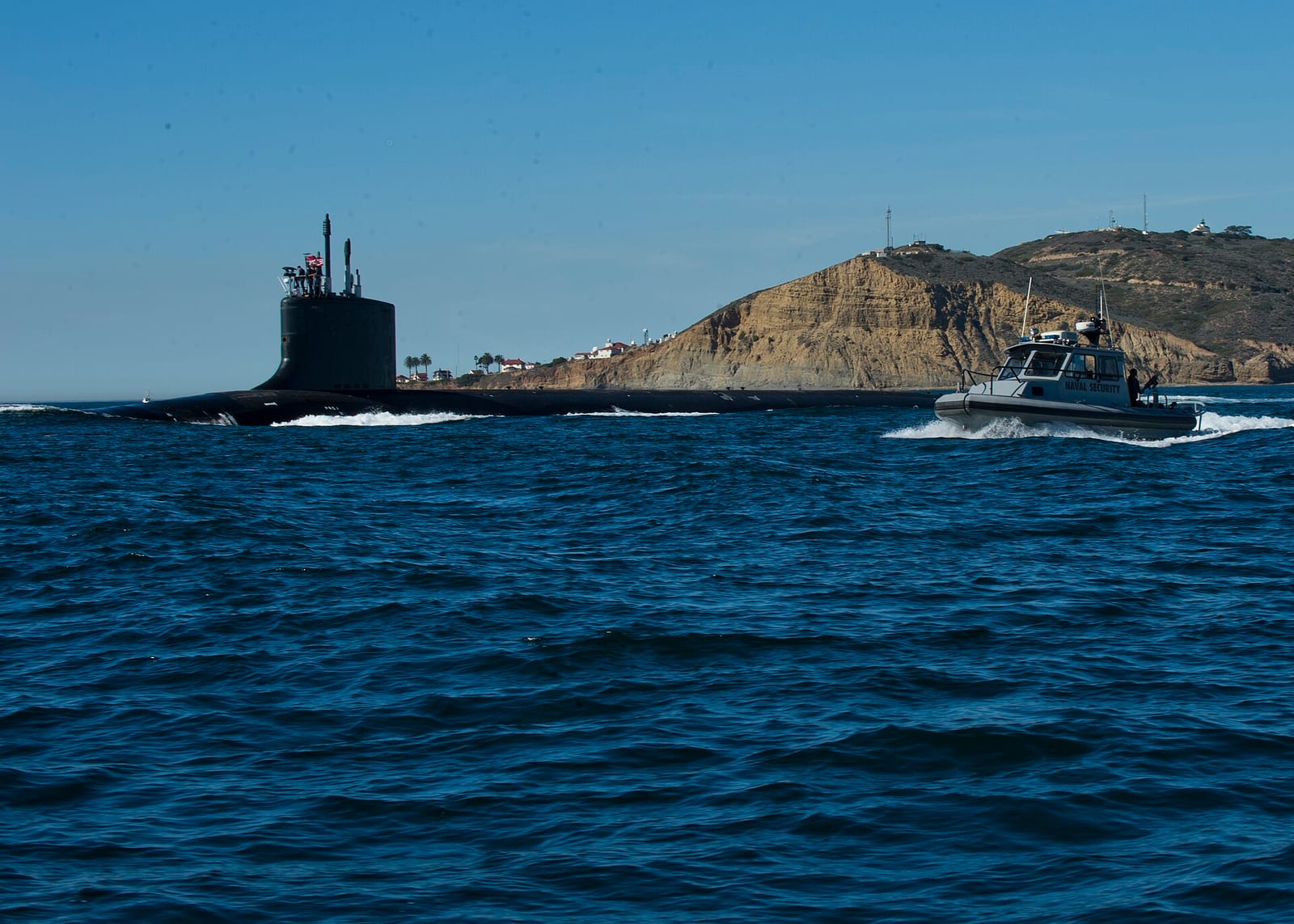
Defense appropriations are the cleanest money trail in Washington, because the bill text funds named programs and the prime contractor for each program is public. We trace the 2026 Consolidated Appropriations Act (HR.7148, enacted Feb 3, 2026) and the companion CJS/Energy/Interior act (HR.6938, enacted Jan 23, 2026) from line item to contractor: roughly $3.9B for Columbia-class and $2.7B for Virginia-class submarines to Huntington Ingalls; $3.6B in Army Black Hawk procurement to Lockheed Martin; $1.75B in DDG-51 destroyers to General Dynamics; and missile and aircraft lines to RTX. We then count how many members of Congress hold each contractor: 28 have bought Boeing, 23 Lockheed, 15 RTX, 13 each Northrop and General Dynamics — bipartisan throughout. The takeaway is low-inference: the public can read who benefits from a defense bill directly off the page, and the beneficiaries are widely held by the members who pass it. Beneficiary mappings combine the bill text with GovGreed's model; holdings are public disclosures, and nothing here alleges an improperly timed trade.
- Key findings
- $6.6B in submarines (Columbia + Virginia) flows to Huntington Ingalls — the single largest named shipbuilding line.
- $3.6B in Army Black Hawks to Lockheed; $1.75B in DDG-51 destroyers to General Dynamics; missile/aircraft lines to RTX.
- The contractors are widely held: 28 members bought Boeing, 23 Lockheed, 15 RTX, 13 each Northrop and General Dynamics.
- The holding is bipartisan — Lockheed's 23 buyers split 11 D / 12 R; Boeing's 28 split 12 D / 16 R.
- The twist: Huntington Ingalls, the biggest named submarine beneficiary, is held by only 3 members — far fewer than the household-name primes.
1. Introduction: the bill that names its winner
Most legislation hides its beneficiaries behind layers of inference — you have to model who a tax change or a regulation helps. Defense appropriations are the exception. An appropriations act funds named programs — the Columbia-class submarine, the UH-60 Black Hawk, the DDG-51 destroyer — and each program has a publicly known prime contractor. The chain from a line in the bill to a ticker on an exchange is short and uncontroversial. You do not need a leak or a model to see who wins; you need the table of contents.
That makes defense the ideal place to test a simple, uncomfortable proposition: are the companies a spending bill enriches also the companies the people passing it own? This paper answers it for the 2026 cycle. First we map the appropriations lines to contractors (§3). Then we count how many members hold each contractor, and how the holding splits by party (§4). The two halves meet in §5.
2. Data and methodology
We use two enacted 2026 appropriations acts — the Consolidated Appropriations Act, 2026 (HR.7148, enacted Feb 3, 2026) and the CJS / Energy & Water / Interior Appropriations Act, 2026 (HR.6938, enacted Jan 23, 2026) — with the FY2026 National Defense Authorization Act as the authorizing companion. The program-to-contractor mapping combines the bill text (specific procurement lines) with GovGreed's bill-analysis model. The holdings come from deduplicated congressional STOCK Act purchase disclosures: for each contractor we count distinct members who have disclosed a buy, split by party. All figures were re-derived live on June 30, 2026.
Two cautions. The dollar lines ($3.9B Columbia, $3.6B Black Hawk, etc.) are program funding levels read from the appropriations and authorization texts; treat them as the bill's stated procurement amounts, not GovGreed-audited totals. The contractor mapping reflects the obvious prime for each program (Huntington Ingalls and Electric Boat for submarines, Lockheed for the Black Hawk via Sikorsky, General Dynamics for DDG-51, RTX for missiles); where a program has multiple primes, we name the lead. Holdings are public and say nothing about timing.
3. From line item to contractor
Here is the core of the 2026 defense money trail — the program lines and the prime contractor each one funds. This is the part you can verify against the bill yourself.
Table 1 · 2026 appropriations — program lines and their prime contractors| Program line | Amount | Prime contractor | Ticker | Bill |
|---|---|---|---|---|
| Columbia-class submarine (strategic deterrent) | $3.9B | Huntington Ingalls | HII | HR.7148 |
| Virginia-class submarine (attack sub) | $2.7B | Huntington Ingalls | HII | HR.7148 |
| UH-60 Black Hawk (Army aircraft procurement) | $3.6B | Lockheed Martin (Sikorsky) | LMT | HR.7148 |
| DDG-51 destroyer (Navy shipbuilding) | $1.75B | General Dynamics | GD | HR.7148 |
| Missile & aircraft lines (procurement / R&D) | — | RTX | RTX | HR.7148 |
| NNSA weapons & NASA exploration (Energy/Science) | $20.3B | Lockheed / Northrop / Boeing | LMT NOC BA | HR.6938 |
| B-21 Raider bomber (authorized, FY26 NDAA) | — | Northrop Grumman | NOC | S.2296 |
Program funding levels read from the 2026 appropriations (HR.7148, HR.6938) and FY2026 NDAA (S.2296) texts; prime-contractor mapping is the obvious lead per program. Amounts are the bills' stated procurement lines, not GovGreed-audited totals. Verified June 30, 2026.
4. Who holds the contractors
Now the other half. Across deduplicated STOCK Act disclosures, here is how many distinct members of Congress have bought each of these contractors — and how the buying splits by party. The headline is breadth and balance: defense contractors are among the most widely held stocks in Congress, and the holding is thoroughly bipartisan.
Figure 1 · Members of Congress who have bought each defense prime (distinct buyers)Distinct members who have disclosed a purchase of each ticker (deduplicated). Bipartisan throughout: Boeing 12 D / 16 R, Lockheed 11 D / 12 R, Northrop and General Dynamics tilt Democratic (9 / 4 each). Verified June 30, 2026.
4.1 The members who own the whole arsenal
Breadth across contractors is as telling as breadth across members. A handful of members hold not one defense prime but most of them at once. Rep. Ro Khanna (D-CA) has disclosed buying all seven of the primes in this analysis — Boeing, General Dynamics, Huntington Ingalls, L3Harris, Lockheed, Northrop and RTX. Rep. Gilbert Cisneros (D-CA) holds six. Below them sits a bipartisan group holding three or more — Reps. Gottheimer (D), Hern (R), Harshbarger (R), Torres (D), Walberg (R), Frankel (D) and others — effectively owning a basket of the defense sector the appropriations bills fund.
Figure 2 · Members holding the most distinct defense primes (of 7)Distinct defense primes (of LMT, RTX, GD, NOC, HII, BA, LHX) each member has disclosed buying. Two members hold nearly the entire complex; the 3+ tier is bipartisan. Verified June 30, 2026.
5. The Huntington Ingalls anomaly
The most interesting number in Figure 1 is the smallest. Huntington Ingalls is the prime for the Columbia-class and a partner on the Virginia-class — together the single largest named shipbuilding line in the 2026 act, about $6.6 billion. Yet only three members of Congress have disclosed buying it, versus 23 for Lockheed and 28 for Boeing. The biggest, most specific beneficiary is the one almost nobody holds.
That nuance matters for the honest version of this story. If members were precisely front-running appropriations, you would expect crowding into the most directly funded pure-plays like Huntington Ingalls. Instead the pattern is the opposite: heavy ownership of the large, liquid, diversified primes — which reads far more like conventional “defense is a safe long-term sector” investing than like line-item timing. The conflict is structural (they fund what they own), not necessarily surgical.
6. Discussion
The defense money trail is valuable precisely because it is boring and verifiable. There is no model risk in “the submarine money goes to the submarine builder.” That lets the conflict-of-interest question be asked in its cleanest form: the 2026 appropriations route billions to a short list of contractors, and a substantial, bipartisan share of Congress owns those contractors. Both facts are public; both are uncontroversial; together they describe a standing structural conflict that exists regardless of whether any single trade was well-timed.
It also connects to our broader contract work. The companion paper Who the U.S. Government Actually Pays shows these same primes dominate the $1.86 trillion federal contract base — Lockheed alone is the single largest recipient. The appropriations bill is simply the upstream decision that becomes those contracts. This paper catches the money one step earlier, at the line item, where the beneficiary is named in plain English.
7. Limitations and caveats
- Dollar lines are the bills' stated levels. The $3.9B / $2.7B / $3.6B / $1.75B figures are procurement amounts read from the appropriations and NDAA texts, not independently audited by GovGreed.
- Contractor mapping names the lead prime. Several programs have multiple primes and subcontractors (e.g. Electric Boat / General Dynamics also builds submarines); we attribute to the obvious lead and note shared programs.
- Holdings are public and untimed. “28 members hold Boeing” counts disclosed buyers over the tracked history; it is not a claim that any purchase was timed to the 2026 bill.
- Buyers, not current holders. Counts reflect members who disclosed a purchase; some may since have sold. The figure measures breadth of participation, not live position.
- Deduplicated. Member and buy counts use the deduplicated disclosure set to neutralize the raw feed's double-ingestion.
8. Conclusion
The 2026 defense budget did the public a favor: it named its winners. Six-plus billion in submarines to Huntington Ingalls, billions in helicopters to Lockheed, destroyers to General Dynamics, missiles to RTX — all legible from the bill, no modeling required. And the contractors on the receiving end are owned, bipartisanly, by dozens of the members who wrote the checks. The one company most directly enriched by the marquee submarine line is held by just three of them, which is its own kind of answer: the conflict here is broad and structural, not a sniper's trade. The budget names the winners; the disclosures name the owners; this paper just put the two lists side by side.
Data availability
Primary sources. Program lines and enactment dates come from Congress.gov (HR.7148, HR.6938, S.2296), tracked in GovGreed's legislation database; the program-to-contractor reading is supported by GovGreed's bill-analysis model. Member holdings come from STOCK Act Periodic Transaction Reports in GovGreed's Congress database.
Derived dataset. The program-to-contractor table and the per-contractor holder counts are reproducible: each bill page shows the model's flagged winners, and each ticker's congressional buyers are listed on the platform. A machine-readable export is available on request — see “Sourcing this for a story?” below.
Reproducibility & verification
This is an independent working paper. Produced by GovGreed Research; not externally peer-reviewed. The holder counts (distinct members buying each contractor, split by party) were re-derived live from the deduplicated STOCK Act set on the publication date. The program funding levels are read from the bill texts and labeled as such; readers can confirm them against the enacted appropriations on Congress.gov.
Conflict of interest & funding
GovGreed is a commercial congressional-trading-intelligence platform; GovGreed Research is its analysis function. This paper received no external funding, and no person named in it was given prior review. It uses only public federal records and model output, and is released free to read, quote, and reproduce under CC BY 4.0 with attribution. It maps a structural conflict of interest; it does not allege an improperly timed trade by any individual.
Revision history
v1.0 · 2026-06-30 — Initial publication. Holder counts derived live from the deduplicated STOCK Act set; program lines read from the 2026 appropriations and FY2026 NDAA texts.
Frequently asked
Sourcing this for a story?
Free to use in a thread, article, or video — just credit GovGreed with a link to this page. Want the full program-to-contractor table, the named list of members holding each prime, or buy dates relative to the bill? Email govgreed@gmail.com — usually 24–48h, free with a link credit.
References & data sources
- 2026 appropriations — HR.7148 (Consolidated Appropriations Act, 2026) and HR.6938 (CJS/Energy/Interior), Congress.gov, in GovGreed's legislation database.
- FY2026 NDAA — S.2296, the authorizing companion (B-21, F-35, Columbia-class lines).
- Contractor mapping — GovGreed bill-analysis model; per-bill winners on each bill page.
- Congressional holdings — STOCK Act Periodic Transaction Reports, in GovGreed's Congress database.
- Companion paper — Who the U.S. Government Actually Pays: the $1.86T contract base these primes dominate.
- Illustration: GovGreed.
Keep pulling the thread
See the receipts — free
Every bill, scored against the contractors it funds and the members who hold them. A free account opens today’s strongest signals and predictions — no card required.
It’s a live portal, not a page: GovGreed scores thousands of congressional signals and refreshes daily, and the AI assistant pulls the exact trades, bills, and filings behind any claim — just ask.
Not financial advice. All data from public federal disclosures.