Who the U.S. Government Actually Pays
A structured analysis of 441,165 federal contract awards — roughly $1.86 trillion in cumulative obligated value — mapped to the 857 publicly traded companies that won them. We examine the data by recipient, agency, product category, and time, then cross-reference it against the financial disclosures of Congress. The result is a portrait of an extraordinarily concentrated procurement system, and of the overlap between the legislators who fund it and the companies that collect. Every figure traces to a primary federal record.
This paper analyzes the universe of U.S. federal contract awards that GovGreed Research has been able to map to publicly traded companies: 441,165 awards worth approximately $1.86 trillion in cumulative obligated contract value, distributed across 857 listed firms. Four findings recur at every level of aggregation. First, the system is extremely concentrated: the five largest recipients capture roughly 78% of all mapped value. Second, it is overwhelmingly a defense system: the Department of Defense alone accounts for ~79% of the total, and fixed-wing aircraft is the single largest product category ($477B). Third, a meaningful share of the spending is recurring rather than discretionary — pharmaceutical supply to the Department of Veterans Affairs runs to tens of thousands of awards. Fourth, when the recipient list is cross-referenced against congressional STOCK Act disclosures, the largest contractors are found in the portfolios of dozens of sitting legislators of both parties. We treat the last finding as a structural conflict-of-interest pattern, not as evidence of any individual wrongdoing. All figures derive from primary federal records, were re-verified on the date of publication, and are reproducible from the primary federal records cited.
- Key findings
- $1.86 trillion in obligated contract value, across 441,165 awards mapped to 857 publicly traded companies.
- Concentration: the top five recipients hold ~$1.44T (≈78%). Lockheed Martin alone is ~$734B (≈40%).
- The Department of Defense awarded ~$1.47T — roughly 79% — of the total.
- By product: fixed-wing aircraft ($477B) leads, then drugs & biologicals ($155B) and guided missiles ($95B).
- Overlap with Congress: Pfizer appears in 69 members' portfolios, Boeing in 52, Honeywell in 52, Lockheed in 44 — bipartisan.
- A power law: the top 10 firms take 88% of all value; the median award is $30,800, yet 278 mega-awards (0.06%) carry 54% of the money.
1. Introduction: the sum nobody computes
Federal contracting is, in principle, the most transparent large flow of money in American government. Every award is published on USAspending.gov the day it is signed, with the recipient, the dollar figure, the awarding agency, and a product/service code attached. In practice, the transparency is inert: the data sit in millions of individual records that are almost never aggregated to the level at which a citizen, an investor, or a journalist could ask the obvious question — over time, who actually collects this money, and for what?
This paper computes that aggregation for the subset of awards that can be tied to a publicly traded company. The restriction to public companies is deliberate: it is the population in which a second public record — the financial disclosures of members of Congress and the executive branch — makes it possible to ask not only who is paid, but who in government is positioned to benefit. Section 7 returns to that overlap. Sections 3 through 6 establish the shape of the spending itself. The research question is descriptive and empirical: how concentrated is the public-company federal contract base, along which dimensions, and to what extent does its recipient set intersect the portfolios of the legislature that funds it?
2. Data and methodology
The underlying corpus is 441,165 federal contract award records drawn from USAspending and matched by recipient name and unique entity identifier (UEI) to 857 publicly traded tickers. For each award we retain the obligated dollar amount, the awarding agency and sub-agency, the start date, and the Product or Service Code (PSC) that classifies what was bought. Awards are then aggregated three ways — by recipient, by agency, and by product category — and the recipient list is joined to GovGreed's database of congressional STOCK Act disclosures on ticker. Every figure is drawn directly from these primary records; the method shared across the series is documented at GovGreed Research.
One definition governs every number that follows. “Contract value” is the cumulative obligated amount on record across all mapped awards (spanning roughly 2005–2026) — not cash disbursed in any single year. A multi-year aircraft program books a large ceiling at signing; that ceiling is what the leaderboard measures. We use the phrase “obligated value” or “tracked contract value” throughout to keep this distinction explicit, and Section 9 treats the resulting limitations in full. Figures were re-derived live from the production database on June 29, 2026; the verification protocol is described in the back matter.
3. The concentration of federal contracting
3.1 The recipient leaderboard
Ranked by cumulative contract value, the distribution is steeply concentrated. Lockheed Martin sits first at about $734 billion — roughly 40% of the entire mapped total on its own; Boeing second at roughly $465 billion. Together the top two are nearly two-thirds of everything. The next tier — RTX, SAIC, General Dynamics, Northrop Grumman, L3Harris — is defense almost without exception. The five largest recipients account for about $1.44 trillion, roughly 78% of the mapped total. Table 1 lists the full top 25; tap any ticker to see which members of Congress have disclosed holding it.
Table 1 · Top 25 recipients by cumulative obligated value| # | Company | Ticker | Contract value | Awards |
|---|---|---|---|---|
| 1 | LMT | $734.3B | 5,415 | |
| 2 | BA | $465.4B | 5,625 | |
| 3 | MCK | $109.0B | 9,777 | |
| 4 | RTX | $83.7B | 8,004 | |
| 5 | SAIC | $52.3B | 2,512 | |
| 6 | GD | $40.4B | 4,064 | |
| 7 | PFE | $40.2B | 5,179 | |
| 8 | BAH | $38.1B | 5,810 | |
| 9 | TXT | $32.7B | 7,670 | |
| 10 | NOC | $31.8B | 4,694 | |
| 11 | LHX | $31.3B | 7,573 | |
| 12 | IBM | $21.8B | 4,234 | |
| 13 | HON | $17.6B | 6,997 | |
| 14 | HII | $9.8B | 79 | |
| 15 | GEO | $8.2B | 284 | |
| 16 | CACI | $6.9B | 1,914 | |
| 17 | GLDD | $6.9B | 277 | |
| 18 | CXW | $6.5B | 195 | |
| 19 | ACM | $5.8B | 3,286 | |
| 20 | MSFT | $5.1B | 1,536 | |
| 21 | UIS | $4.8B | 1,379 | |
| 22 | LLY | $4.7B | 7 | |
| 23 | PLTR | $4.5B | 326 | |
| 24 | T | $4.4B | 6,127 | |
| 25 | LDOS | $4.1B | 333 |

























Ranked by cumulative obligated contract value (USAspending), mapped to public-company tickers. Verified June 29, 2026.
A note on award counts versus value. The two diverge sharply and the divergence is itself informative. Huntington Ingalls reaches $9.8B across just 79 awards — shipbuilding is a small number of very large contracts. McKesson, by contrast, reaches $109B across 9,777 awards — pharmaceutical distribution is a vast number of small, repeating ones. The first pattern is a procurement event; the second is an operating dependency. Section 6 returns to it.
3.2 By sector
Aggregated by sector, two categories absorb the overwhelming majority. Aerospace is approximately $1.26 trillion on its own; combined with defense ($276B) it reaches roughly $1.53 trillion, about four-fifths of all mapped value. Healthcare (~$124B) and pharma (~$46B) form the only other substantial blocks — the institutional footprint of the Veterans Affairs medical system.
Figure 1 · Obligated value by sector3.3 By awarding agency
The agency view is the starkest in the paper. Of the $1.86 trillion, the Department of Defense awarded about $1.47 trillion — roughly 79 cents of every dollar — across 233,518 separate awards. The Department of Veterans Affairs is a distant second at ~$121B, then NASA (~$61B), and a long tail of civilian agencies (GSA, Homeland Security, HHS, Energy) none of which individually exceeds $40B. In the public-company contracting universe, “federal spending” is, to first approximation, defense spending.
Figure 2 · Obligated value by awarding agencyDrilling into the Pentagon itself shows that “defense spending” is not one budget but several. The Defense Contract Management Agency — which administers the largest prime contracts — books $431B across only 6,047 awards; the three service branches (Navy $361B, Air Force $297B, Army $260B) follow. The instructive outlier is the Defense Logistics Agency: $35B spread across 151,570 awards, an average of roughly $230,000 each. One agency writes a few enormous checks; another writes a hundred and fifty thousand small ones. Both are “the Pentagon.”
Figure 3 · The Pentagon, decomposed by sub-agency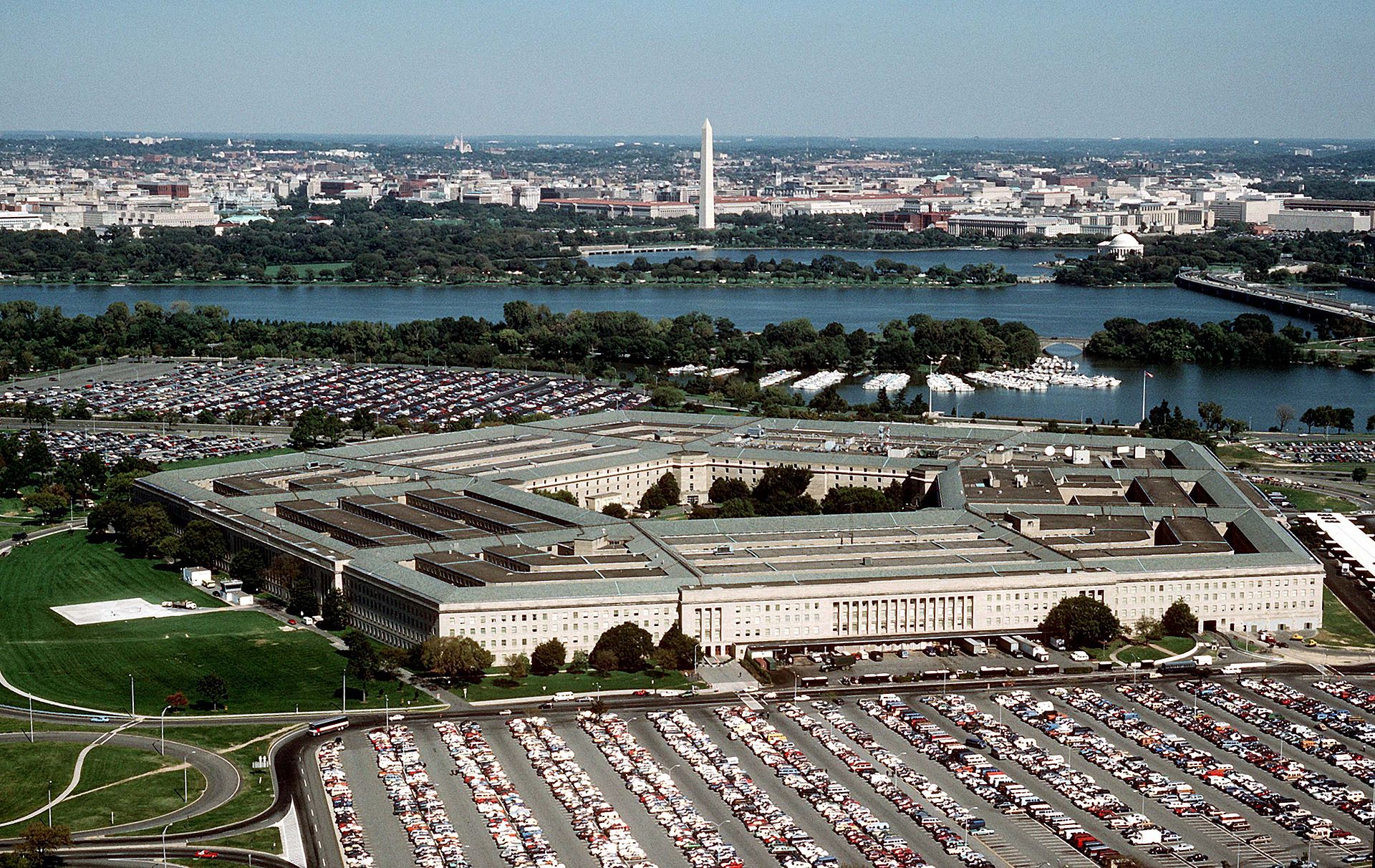
3.4 What the money buys
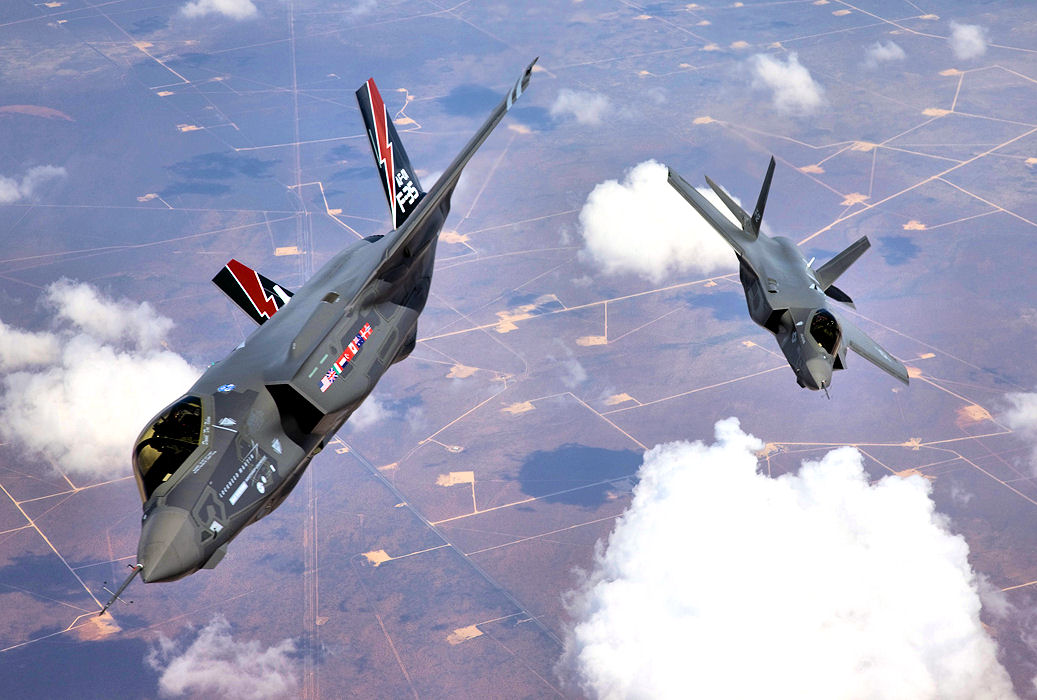
Classifying awards by Product or Service Code reveals the physical composition of the spending. The single largest category is fixed-wing aircraft ($477B) — the F-35 and its peers. The second is not a weapon at all: drugs and biologicals ($155B across 24,281 awards), the pharmaceutical supply chain of the federal medical system. After that the list returns to ordnance — guided missiles ($95B), jet engines ($57B), defense R&D ($57B), helicopters ($49B) — interleaved with the professional and engineering services that support them. The procurement state, in one chart, is aircraft and medicine.
Figure 4 · Obligated value by product/service code (PSC)3.5 The shape of the distribution
The concentration documented above is not a casual impression; it is a measurable property of the data, and it has a familiar shape — a steep power law. Ranking all 857 recipients and accumulating their value, the single largest firm (Lockheed) is 40% of the total; the top five are 78%; the top ten are 88%; and the top twenty-five are 95%. The remaining 832 companies — 97% of all recipients — divide the last 5% of the money. The federal contract base is, statistically, a handful of firms and a very long tail.
Figure 5 · Cumulative share of value by recipient rankThe same skew appears at the level of individual awards. Across the 434,000 awards that carry a positive dollar value, the median award is just $30,800 — a routine purchase order — while the mean is $4.3 million, a gap that only a heavily right-tailed distribution produces. 278 awards (six-hundredths of one percent of them) are each $1 billion or larger, and those 278 alone account for 54% of all the money. At the other end, 70% of awards are under $100,000. Two procurement systems coexist in one dataset: a small number of enormous weapons programs, and an ocean of small recurring purchases.
Table 2 · The size distribution of awards| Measure | Value | Reading |
|---|---|---|
| Median award | $30,800 | The typical award is a small purchase order |
| Mean award | $4.3M | 140× the median — extreme right tail |
| Awards ≥ $1B | 278 | 0.06% of awards… |
| …their share of all value | 54% | …yet over half the money |
| Awards < $100K | 70% | The vast majority are routine |
Across 434,177 mapped awards with a positive obligated value. Verified June 29, 2026.
4. The largest individual awards
Decomposing the aggregate into single awards confirms what Section 3.4 implies: one weapons program dominates. The three largest individual awards in the data are all the F-35 — Lockheed Martin's LRIP Lot 12 advance acquisition (~$35B), Lot 15 (~$30B), and long-lead funding for the following batch (~$25B). Boeing's KC-X aerial-refueling tanker (~$32B) and its share of the International Space Station (~$22B, awarded by NASA) are the only non-F-35 entries near the top. A single fighter appears three times before any other contract does.
Table 3 · Five largest individual awards| Award | Company | Agency | Value | Signed |
|---|---|---|---|---|
| F-35 LRIP Lot 12 (advance acquisition) | LMT | Defense | $35.1B | 2017 |
| KC-X tanker modernization | BA | Defense | $32.0B | 2011 |
| F-35A LRIP Lot 15 | LMT | Defense | $30.1B | 2019 |
| F-35A long-lead funding | LMT | Defense | $24.5B | 2022 |
| International Space Station | BA | NASA | $22.4B | 1993 |
5. The temporal pattern
Distributing awards by start year shows the flow is steady rather than spiky: in most years between 2019 and 2024, $80–120 billion in new contract value was obligated to public companies, peaking in 2020 (~$122B). The apparent decline in 2025–2026 is an artifact of the measurement window, not a real contraction: multi-year ceilings are booked at signing, so the most recent years are still accruing modifications and have not yet “filled in.” The durable finding is the stability of the baseline — this is not an episodic program but a permanent, eleven-to-twelve-figure annual relationship between the federal government and a fixed set of firms.
Figure 6 · New obligated contract value by start year6. Beyond hardware: dependencies and the surveillance state
Not every entry on the leaderboard is a weapons program, and the exceptions are analytically important because they are recurring. The clearest case is McKesson: a pharmaceutical distributor with the most awards of any company in the data — 9,777 — supplying the Veterans Affairs medical system on a continuous basis. This is not a procurement event the government could decline next year; it is an operating dependency, the demand-side mirror of the $155B “drugs and biologicals” category in Section 3.4.
A second cluster sits at the intersection of incarceration and surveillance. Two publicly traded private-prison operators — The GEO Group ($8.2B) and CoreCivic ($6.5B) — together hold roughly $14.7B in federal contract value, much of it immigration detention. Alongside them, the data-analytics and intelligence-services tier — Palantir ($4.5B), CACI ($6.9B), Leidos ($4.1B), Booz Allen ($38.1B) — represents the contracted-out machinery of surveillance and federal IT. The checkbook reaches well past the flight line.
6.1 The pharmaceutical dependency
The $155B “drugs and biologicals” category is, on inspection, one company's business. McKesson alone is $108.8B across 9,732 awards — effectively the wholesale distribution layer of the Veterans Affairs and Defense medical systems. Pfizer follows at $39.5B, then a steep drop to Eli Lilly, Cardinal Health, and a tail of biotech names. This is the part of the federal checkbook that looks least like “procurement” and most like a utility bill: continuous, non-discretionary, and routed through a near-monopoly distributor.
Table 4 · Drugs & biologicals: top public-company suppliers

6.2 The rising contractor: Palantir
If the leaderboard is mostly a story of incumbents, one name shows the system can still admit a new entrant — fast. Palantir's federal contract value was negligible a decade ago; it has climbed to roughly $744M of new awards in 2024 and $1.1B in 2025, the steepest trajectory of any company in the data. The growth is concentrated in data-analytics and intelligence work — the software counterpart to the surveillance-services tier above. It is the clearest single signal of where the next decade of contracting is heading: away from the airframe, toward the algorithm.
Figure 7 · Palantir federal contract value by year ($M)7. The overlap with Congress
The preceding sections describe a public record. This one joins it to a second public record — the STOCK Act disclosures filed by members of Congress — and the result is the analytical core of the paper. The companies that dominate the contract leaderboard are not obscure holdings; they recur, heavily, in the portfolios of sitting legislators. Counting the distinct members who have disclosed each of the largest contractors:
Figure 8 · Distinct members of Congress holding each top contractorThe concentration recurs on the members' side as well. A dozen legislators have disclosed positions in a large fraction of the fifteen biggest contractors at once. The list is conspicuously bipartisan — seven Democrats and five Republicans — which is precisely why it is a story about the institution rather than about individuals.
Table 5 · Members holding the most of the top-15 contractors| Member | Party | State | Top-15 contractors held |
|---|---|---|---|
 RKRo Khanna RKRo Khanna | D | CA | 12 |
 GCGilbert Cisneros GCGilbert Cisneros | D | CA | 10 |
 RBRobert Bresnahan RBRobert Bresnahan | R | PA | 9 |
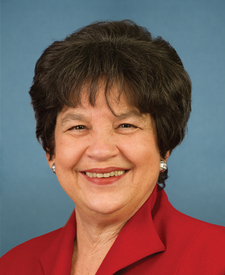 LFLois Frankel LFLois Frankel | D | FL | 9 |
 JJJulie Johnson JJJulie Johnson | D | TX | 9 |
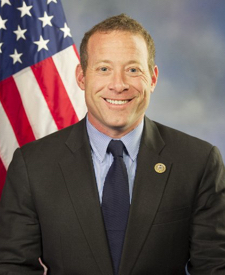 JGJosh Gottheimer JGJosh Gottheimer | D | NJ | 8 |
 SWSheldon Whitehouse SWSheldon Whitehouse | D | RI | 7 |
 JSJefferson Shreve JSJefferson Shreve | R | IN | 7 |
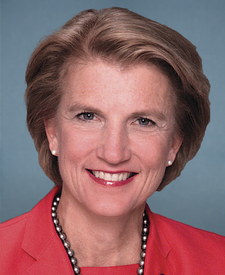 SCShelley Moore Capito SCShelley Moore Capito | R | WV | 7 |
 JMJared Moskowitz JMJared Moskowitz | D | FL | 7 |
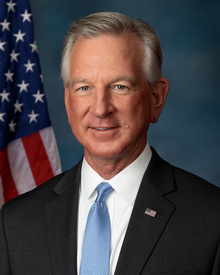 TTTommy Tuberville TTTommy Tuberville | R | AL | 7 |
 JJJohn James JJJohn James | R | MI | 6 |
Distinct disclosed STOCK Act positions in the 15 largest tracked contractors, per member. Many are spouse- or manager-held; all are legally disclosed. Verified June 29, 2026. Cross-check on the Congress leaderboard or look up who owns any stock.
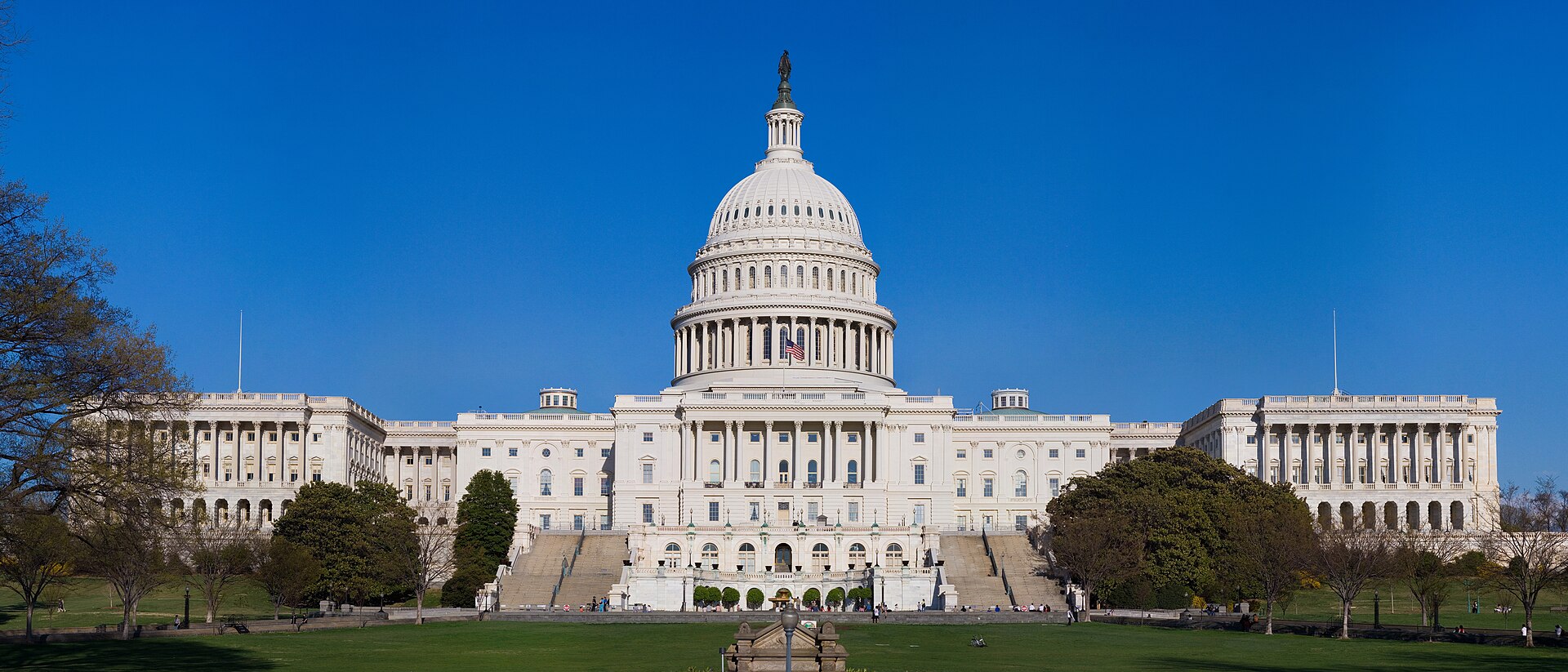
Two cases — deliberately one from each party — make the overlap concrete rather than statistical. Senator Tommy Tuberville (R-AL), a member of the Senate Armed Services Committee that authorizes the defense budget, has disclosed holding four of the six largest defense primes at once — General Dynamics, Lockheed Martin, Northrop Grumman, and RTX. Representative Ro Khanna (D-CA), the most active trader in Congress, has disclosed all six. Neither fact is an accusation, and neither trade is alleged to be improper. They are simply what the overlap looks like at the level of one person: the authorizer of the contract and the owner of the contractor, in the same name, on the same disclosure form.
8. Discussion
Read together, the findings describe an “iron triangle” in its most literal, measurable form. A small set of firms receives the overwhelming majority of federal contract value; the agencies that award it are concentrated in a single department; and the legislators who appropriate and authorize that department's budget hold equity in the very firms that collect. None of the three facts is hidden. What has been missing is their conjunction — the simple act of placing the contract ledger and the disclosure ledger side by side.
The conjunction does not, by itself, establish causation. A member of Congress who holds Lockheed Martin through a managed account is not thereby shown to have voted a defense budget in order to enrich themselves; the holding may be passive, spouse-directed, or trivial in size. But the structural fact remains uncomfortable on its own terms: the population of people empowered to direct $1.47 trillion toward a set of companies overlaps materially with the population of people who own those companies. In any other fiduciary context that overlap would trigger recusal. In Congress it triggers a 45-day disclosure form — and, when that form is filed late, a $200 fee, the subject of the companion paper The $200 Fine.
9. Limitations and caveats
Several constraints bound the interpretation of these figures and should be stated plainly.
- Contract value is cumulative, not annual. Every recipient and category total is the sum of obligated amounts across all mapped awards (~2005–2026). It is not cash paid in a year, and should never be reported as such. Lockheed's ~$734B is a multi-year figure.
- Coverage is the mapped subset, not all federal spending. This analysis covers awards GovGreed could tie to a public-company ticker (857 firms). Awards to private firms, universities, nonprofits, and unmapped entities are excluded; the true federal contract universe is larger.
- Ticker mapping is imperfect. Recipient-name and entity-identifier matching can misattribute subsidiaries or miss name variants. Source sector labels are noisy (several primes are mis-tagged, and one telecom tag carries an implausible aggregate), so sector figures are used only at the coarse level and counts are favored over sector-value totals.
- A small number of records carry bad dates. A handful of awards bear obviously erroneous start years (e.g., 2030, 2104). They are immaterial to the totals (<0.01% of value) but are why the temporal chart is bounded to 2019–2026.
- Holding ≠ wrongdoing. A disclosed congressional position is legal. Many are spouse- or manager-held and small. The overlap is a conflict-of-interest pattern, not proof that any specific trade or vote was improper.
- Recency is under-counted. Multi-year ceilings accrue modifications over time, so the most recent years (2025–26) understate eventual totals (Section 5).
10. Conclusion
The U.S. federal contracting system, restricted to its publicly traded recipients, is a $1.86 trillion structure of remarkable concentration: one department, a handful of firms, and a product mix dominated by aircraft and pharmaceuticals. That much is a straightforward description of public data. The finding that makes it more than an accounting exercise is the overlap with Congress — the same names, in the same disclosures, on both sides of the aisle. GovGreed did not uncover anything that was hidden. It organized what was always public into a pattern that is difficult, once seen, to un-see.
Data availability
Primary source. All contract figures derive from USAspending.gov, the U.S. Treasury's official system of record for federal awards (recipient, obligated amount, awarding agency, PSC, start date). Congressional holdings derive from STOCK Act periodic transaction reports.
Derived dataset. The 441,165-award, 857-ticker mapped table analyzed here is maintained by GovGreed and queryable live through the platform's ticker and Congress pages, so any reader can re-derive every number against the same primary source. The mapping and verification method shared across the series is documented at GovGreed Research. A company-by-company export or a custom cut (by agency, sector, or member) is available on request — see “Sourcing this for a story?” below.
Reproducibility & verification
This is an independent working paper. It is produced by GovGreed Research and has not undergone external academic peer review. In place of peer review, every headline figure was re-derived live from the production database on the publication date against the primary federal records cited. Where a source field is known to be noisy (sector tags, a small number of bad dates), the limitation is disclosed in Section 9 and the affected figure is either bounded or replaced with a more robust statistic.
Verification protocol. (1) Headline totals re-run against the live table; (2) leaderboard cross-checked against per-recipient award counts to flag single-record outliers; (3) congressional overlap re-counted with COUNT(DISTINCT bioguide_id) rather than trusting cached statistics; (4) figures that disagreed with the prior version of this paper were corrected to the live values (the mapped total moved from $2.13T to $1.86T between v1.0 and v2.0).
Conflict of interest & funding
GovGreed is a commercial congressional-trading-intelligence platform; GovGreed Research is its analysis function. This paper received no external funding and no party named in it was given prior review. The platform monetizes subscriptions, not the entities analyzed here. The analysis uses only public federal records and is released free to read, quote, and reproduce under CC BY 4.0 with attribution.
Revision history
v2.1 · 2026-06-29 — Expanded analysis: added the Pentagon sub-agency decomposition (Figure 3), the distribution/power-law section (Figure 5, Table 2), the pharmaceutical-supply breakdown (Table 4), and Palantir's contract trajectory (Figure 7).
v2.0 · 2026-06-29 — Re-verified all figures live; mapped total corrected $2.13T→$1.86T, awards 440,591→441,165, tickers 832→857, DoD share 78%→79%; recipient leaderboard re-ordered; congressional cross-holder table expanded and re-counted; working-paper apparatus and data-availability statement added.
v1.0 · 2026-06-29 — Initial publication.
Frequently asked
Sourcing this for a story?
Free to use in a thread, article, or video — just credit GovGreed with a link to this page. Want the full company-by-company dataset, the per-contractor congressional ownership cross-reference, or a custom cut (a specific agency, sector, or member)? Email govgreed@gmail.com — usually 24–48h, free with a link credit.
References & data sources
- USAspending.gov — U.S. Department of the Treasury, official federal award data (recipient, obligated amount, awarding agency, PSC). usaspending.gov
- STOCK Act disclosures — congressional periodic transaction reports, as tracked in GovGreed's Congress database; per-ticker lookup at who in Congress owns a stock.
- The disclosure law — The STOCK Act, explained: the 45-day rule and its enforcement.
- Methodology — GovGreed Research: sources & methods: how awards are mapped to tickers and cross-referenced, plus the verification protocol shared across the series.
- Companion paper — The President's Checkbook: the same contract database mapped against executive-branch disclosures.
- Image credits (public domain): F-35 — U.S. Air Force; the Pentagon — DoD / MSgt Ken Hammond, U.S. Air Force; the U.S. Capitol — public domain via Wikimedia Commons.
Keep pulling the thread
See the receipts — free
Every federal contract, cross-referenced against the members of Congress who hold the stock. A free account opens today’s strongest signals and predictions — no card required.
It’s a live portal, not a page: GovGreed scores thousands of congressional signals and refreshes daily, and the AI assistant pulls the exact trades, bills, and filings behind any claim — just ask.
Not financial advice. All data from public federal disclosures.