The Crypto Congress
In 2025 Congress spent the year making crypto easier to own and trade. Across the same year, its own members were buying it. Twenty disclosed purchases of crypto-linked stocks and ETFs — and the biggest buyer, a senator on the Banking Committee that writes the rules, bought the Bitwise Bitcoin ETF twenty-two times.

In 2025 Congress made crypto easier to own and trade — most concretely by using the Congressional Review Act (HJRES.25, enacted April 10, 2025) to repeal the IRS rule requiring brokers, including decentralized-finance platforms, to report digital-asset proceeds. Across the same period, 20 members of Congress disclosed buying crypto-linked stocks and ETFs — Coinbase, MicroStrategy, Robinhood, and spot-bitcoin ETFs such as Bitwise's BITB and BlackRock's IBIT. The standout is Sen. David McCormick (R-PA) — a member of the Senate Banking Committee, which writes the rules for crypto — who bought the Bitwise Bitcoin ETF 22 times in 2025 for a disclosed midpoint of about $1.14 million. The buyers are bipartisan, spanning at least a dozen named members of both parties. We document the overlap between the sector Congress deregulated and the sector its members traded; the bill's winners are model-judged, and no individual trade is alleged to have used non-public information.
- Key findings
- 20 members disclosed buying crypto-linked tickers (COIN, MSTR, HOOD, BITB, IBIT…) — bipartisan, mostly across 2025.
- Sen. David McCormick (R-PA), on Senate Banking, bought the Bitwise Bitcoin ETF 22 times in 2025 — ~$1.14M disclosed.
- The same year, Congress repealed the IRS crypto-broker rule (HJRES.25, enacted Apr 10, 2025); the model flags Coinbase and MicroStrategy as winners.
- Rep. Jefferson Shreve (R-IN) disclosed a Coinbase + MicroStrategy buy on Feb 24, 2025 — two days before the resolution's committee report (verify against the PTR).
- Trading crypto is legal with disclosure. This is an overlap between what Congress deregulated and what it owned, not an insider-trading claim.
1. Introduction: deregulate it, then buy it
2025 was crypto's year in Washington. After a decade of regulatory hostility, Congress moved to make digital assets easier to own, trade, and build on — and the most concrete step was a repeal. Using the Congressional Review Act, Congress nullified an IRS rule that would have forced “brokers,” including decentralized-finance platforms, to report their customers' crypto proceeds. The reporting burden vanished; the industry exhaled.
This paper sets that policy beside a second public record: what Congress's own members were buying. The answer is that the same year Washington deregulated crypto, 20 members disclosed buying crypto-linked securities — and one of them, a senator on the committee that writes crypto's rules, did so twenty-two times. We are not alleging anyone front-ran a vote; we are putting the deregulation and the disclosures on the same page, because they happened on the same calendar.
2. Data and methodology
We identify congressional purchases of crypto-linked tickers — the regulated, public proxies for crypto exposure: Coinbase (COIN), MicroStrategy (MSTR), Robinhood (HOOD), and spot-bitcoin ETFs including Bitwise's BITB and BlackRock's IBIT — from deduplicated STOCK Act disclosures. The deregulation backdrop (HJRES.25 and its winners) comes from GovGreed's legislation database and bill-analysis model. All figures were re-derived live on June 30, 2026.
Three cautions. First, these are proxies, not tokens: members disclose stocks and ETFs, not direct crypto wallets, so this understates anyone holding crypto directly and overstates nothing. Second, 20 distinct members appear in the disclosures; we name the dozen-plus whose records map cleanly to current member pages, and a few buyers are former members. Third, the bill's winners are model-judged, and the overlap we report is calendar overlap — deregulation and buying in the same year — not a claim that any trade was timed to a vote.
3. The deregulation backdrop
The anchor event is HJRES.25, enacted April 10, 2025. It used the Congressional Review Act to erase the IRS's digital-asset broker-reporting rule — the one corner of crypto policy that would have pushed DeFi platforms to report user proceeds to the government. GovGreed's bill-analysis model flags the beneficiaries as COIN (which avoids a reporting and compliance burden on its core business) and MSTR (the largest corporate bitcoin holder). It is one of the sixteen 2025 rollbacks catalogued in our companion paper, The Deregulation Supercut — and the only one whose entire sector is a single asset class.
4. The buyers
Here are the members who disclosed buying crypto-linked tickers, ranked by number of purchases. The list is bipartisan, and it is topped, decisively, by one name.
Table 1 · Members who bought crypto-linked tickers (deduplicated purchases)| Member | Party | St. | Buys | Tickers | Window |
|---|---|---|---|---|---|
 DMDavid McCormick DMDavid McCormick | R | PA | 22 | BITB | Feb–Nov ’25 |
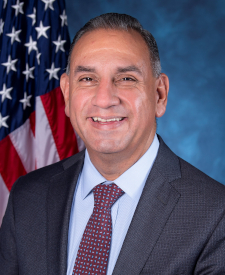 GCGilbert Cisneros GCGilbert Cisneros | D | CA | 10 | COIN HOOD | ’25–’26 |
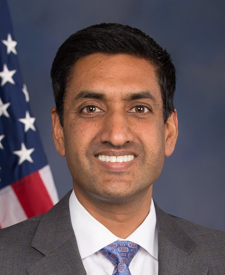 RKRo Khanna RKRo Khanna | D | CA | 9 | COIN HOOD | ’25–’26 |
 RBRobert Bresnahan RBRobert Bresnahan | R | PA | 3 | COIN HOOD | May–Jun ’25 |
 JJJonathan Jackson JJJonathan Jackson | D | IL | 3 | HOOD | Sep–Nov ’25 |
 JSJefferson Shreve JSJefferson Shreve | R | IN | 2 | COIN MSTR | Feb–May ’25 |
 SBSheri Biggs SBSheri Biggs | R | SC | 2 | IBIT | ’25–’26 |
 BGBrandon Gill BGBrandon Gill | R | TX | 2 | IBIT | Jul–Oct ’25 |
 CFCleo Fields CFCleo Fields | D | LA | 2 | HOOD | Jul ’25 |
 STShri Thanedar STShri Thanedar | D | MI | 1 | MSTR | Jul ’24 |
 BDByron Donalds BDByron Donalds | R | FL | 1 | HOOD | Mar ’25 |
 TMTim Moore TMTim Moore | R | NC | 1 | COIN | Sep ’25 |
Deduplicated congressional purchases of crypto-linked tickers; 20 distinct members in total, the dozen-plus mapping cleanly to current member pages shown here. Bipartisan: seven Republicans, five Democrats named. Verified June 30, 2026. Look up any member on the Congress leaderboard.
5. The flagship: a Banking senator and 22 bitcoin-ETF buys
Sen. David McCormick (R-PA) is the case the whole paper turns on. A former chief executive of the world's largest hedge fund, he sits on the Senate Banking Committee — the panel with direct jurisdiction over how crypto is regulated. Across 2025 he disclosed buying the Bitwise Bitcoin ETF (BITB) 22 separate times, from February through November, for a disclosed midpoint of about $1.14 million — steady, repeated accumulation of a pure bitcoin-price instrument, by a member of the committee writing bitcoin's rules, in the year those rules were loosened.
A smaller but sharper timing note sits lower in the table. Rep. Jefferson Shreve (R-IN) disclosed buying both Coinbase and MicroStrategy on February 24, 2025 — two days before HJRES.25's committee report on February 26. We flag it rather than conclude from it: the trade date is in our data, the report date is the legislative record, and the two-day gap should be confirmed against the original filing before anyone builds a story on it. If it holds, it is a textbook committee-timing coincidence; if not, it folds into the broader “traded the sector they deregulated” pattern that needs no precise timing to matter.
6. Discussion
The crypto Congress is a clean instance of a pattern GovGreed documents from several angles at once. It is a deregulation story (a rule killed, a sector freed), a committee-advantage story (a Banking member trading the assets his committee governs), and a convergence story (a dozen members landing on the same handful of tickers in the same window). None of it requires a secret. Congress told the public it was deregulating crypto, and the disclosures told the public its members were buying it. Lined up on one calendar, the two records describe an industry whose biggest 2025 policy win and whose congressional shareholders were, to a striking degree, the same people in the same rooms.
7. Limitations and caveats
- Proxies, not tokens. We count disclosed stocks and ETFs (COIN, MSTR, HOOD, BITB, IBIT…), the regulated proxies for crypto exposure — not direct token holdings, which members are not required to disclose the same way.
- Calendar overlap, not timing. The core claim is that deregulation and member buying happened in the same year. Except where explicitly flagged (Shreve), we make no trade-level timing claim.
- The Shreve note is unconfirmed. The Feb 24 buy vs. Feb 26 committee report should be verified against the original PTR and Congress.gov action date before it is treated as a committee-timing finding.
- Bill winners are model-judged. COIN/MSTR as HJRES.25 beneficiaries are GovGreed model estimates, not price predictions.
- 20 members, a dozen named. Twenty distinct members appear in the data; the table names those mapping cleanly to current member pages. A few buyers are former members.
- Legal activity. Trading crypto-linked securities with disclosure is lawful; nothing here alleges insider trading.
8. Conclusion
In one year, Congress made crypto easier to trade and a slice of Congress traded it — bipartisanly, in the open, on the public record. The emblem is a Senate Banking member buying a bitcoin ETF twenty-two times while his committee's domain was being deregulated around him. It may all be lawful and even ordinary. It is also, laid out plainly, the clearest answer yet to the question the STOCK Act was supposed to make askable: when Washington decides to help an industry, who in Washington already owns it?
Data availability
Primary sources. Trades come from congressional Periodic Transaction Reports (STOCK Act), tracked in GovGreed's Congress database. The deregulation event (HJRES.25) and its model-flagged winners come from GovGreed's legislation database and bill-analysis model.
Derived dataset. The crypto-buyer table is reproducible: each member's trade history is on their member page, and HJRES.25's analysis is on its bill page. A machine-readable export is available on request — see “Sourcing this for a story?” below.
Reproducibility & verification
This is an independent working paper. Produced by GovGreed Research; not externally peer-reviewed. The 20-member count, McCormick's 22 BITB buys and ~$1.14M disclosed midpoint, and the buyer table were re-derived live from the deduplicated STOCK Act set on the publication date. The Shreve timing note is explicitly flagged as requiring confirmation against the original PTR.
Conflict of interest & funding
GovGreed is a commercial congressional-trading-intelligence platform; GovGreed Research is its analysis function. This paper received no external funding, and no person named in it was given prior review. It uses only public federal records and model output, and is released free to read, quote, and reproduce under CC BY 4.0 with attribution. Trading crypto-linked securities with disclosure is lawful; nothing here alleges wrongdoing.
Revision history
v1.0 · 2026-06-30 — Initial publication. Buyer table and McCormick figures derived live from the deduplicated STOCK Act set; HJRES.25 from the legislation database.
Frequently asked
Sourcing this for a story?
Free to use in a thread, article, or video — just credit GovGreed with a link to this page. Want the full crypto-buyer list with dates and amounts, McCormick's BITB buy log, or the HJRES.25 winner analysis? Email govgreed@gmail.com — usually 24–48h, free with a link credit.
References & data sources
- STOCK Act disclosures — congressional Periodic Transaction Reports, in GovGreed's Congress database.
- HJRES.25 — the crypto-broker rule repeal, on GovGreed's legislation tracker; winners from the bill-analysis model.
- Methodology — GovGreed Research: sources & methods.
- Companion papers — The Deregulation Supercut (GGR-WP-2026-06) · The Committee Advantage (GGR-WP-2026-12).
- Image credit: Bitcoin-symbol token — Satheesh Sankaran, CC BY-SA 2.0 via Wikimedia Commons.
Keep pulling the thread
See the receipts — free
Every trade, scored against the bills it tracks and the committees behind it. Free account: today’s top 10 signals + predictions. No card required.
Not financial advice. All data from public federal disclosures.