When Congress Moves as a Herd
Sometimes a stock doesn't draw one member of Congress. It draws a crowd. GovGreed flags 65 clusters where three or more members bought the same stock inside a tight window — 25 of them with four or more, and every single one a buy, never a sell. The biggest pulled seven members, from both parties, into Microsoft. This paper maps the herd.
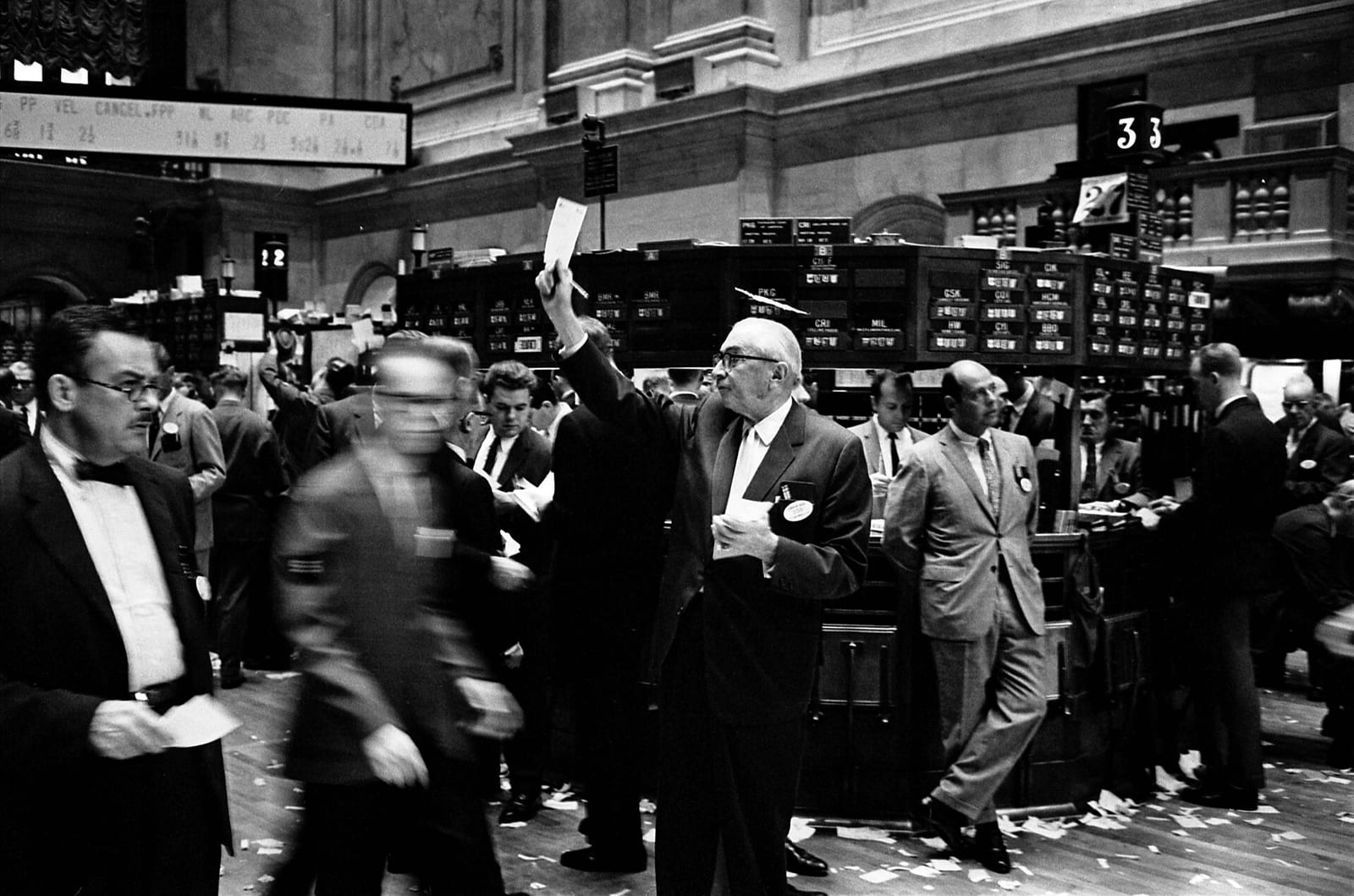
GovGreed's herd detector flags clusters in which three or more members of Congress disclose buying the same stock inside a tight window. As of June 2026 it identifies 65 such herds; 25 involve four or more members, and all 65 are net-bullish buy clusters — there is not a single coordinated sell. The herds concentrate in mega-cap technology: Microsoft alone accounts for eight clusters, including the largest ever detected — a seven-member, bipartisan convergence worth a combined $1.4–2.8 million over 61 days in spring 2026. A six-member, bipartisan Apple cluster — with Nancy Pelosi among the buyers — shows the identical shape. We are careful about what this is: committee alignment for these clusters is zero, so we treat a herd as convergence, a measurable behavioral signal, not evidence of coordination or insider trading. No individual is accused of anything.
- Key findings
- 65 herds detected — clusters of 3+ members buying one stock in a tight window.
- 25 of them pulled in 4 or more members; the largest reached 7.
- Every herd is a buy. Across all 65 clusters there are zero coordinated sells.
- Microsoft is the most-herded stock by far — 8 separate clusters — followed by Amazon, Home Depot, Apple, Alphabet and NVIDIA.
- Committee alignment for these clusters is 0. This is convergence on large-cap names, not a committee-timing or insider signal.
1. Introduction: the crowd at the same door
Most congressional trades are solitary. One member, one stock, one disclosure. But every so often the disclosures cluster: within a few weeks, a handful of members — in different states, on different committees, in different parties — all report buying the same company. GovGreed calls that a herd, and it is one of the more arresting patterns in the data, because a single buy is anecdote while a crowd of buys is behavior.
This paper characterizes the herd: how many there are, how big they get, which stocks attract them, and what two of the largest look like up close. It also draws a careful line. A herd is not proof that members talked to one another or acted on something the public didn't have. We will show that the clusters carry no committee alignment at all, which is exactly why we treat them as convergence — many people independently reaching the same conclusion — rather than coordination. That distinction is the spine of the whole paper.
2. Data and methodology
The herd detector scans STOCK Act disclosures for windows in which three or more distinct members disclose a purchase of the same ticker. For each cluster it records the member set, the window start and end, the tightness (days from first buy to last), the combined disclosed value range (summing each trade's bracket), a quality-weighted member count, and a net direction. A herd is scored and tiered (S through F) on member count, tightness, and the quality of the members involved. All figures here were re-derived live on June 30, 2026.
Two methodological facts shape every claim below. First, the detector is buy-side: it surfaces convergent purchases, and across all 65 clusters the net direction is bullish 65 times out of 65 — Congress converges to accumulate, essentially never to sell in unison. Second, the combined value is a range, not a point, because STOCK Act amounts are disclosed in brackets (e.g. “$15,001–$50,000”); we report the min and max of the summed brackets and never a false-precision midpoint as if it were exact.
3. The landscape: 65 herds, and where they gather
Herds are not spread evenly across the market. They pool around the largest, most liquid, most familiar names — the stocks a member can buy in size without explaining anything. Microsoft is the gravitational center, drawing eight distinct clusters; Amazon and Home Depot draw five each; Apple, Alphabet and JPMorgan three each; NVIDIA twice but with up to six members at once.
Figure 1 · Most-herded stocks (number of detected clusters)Distinct herd clusters per ticker (a stock can herd more than once, in different windows). Mega-cap technology dominates. Verified June 30, 2026.
The concentration is itself a finding. Herds form where information is most public and liquidity is deepest — which is another reason to read them as convergence rather than secret-sharing. If members were front-running obscure catalysts, you would expect herds in small, thinly covered names. Instead they pile into the same megacaps the whole market watches.
3.1 The habitual herders
Herds are not random draws from the whole Congress; the same names recur. Counting how many of the 65 clusters each member appears in produces a short list of habitual herders — and it is, again, bipartisan. Rep. Ro Khanna (D-CA) appears in 45 of 65, a near-mechanical consequence of being the most active trader in Congress: trade enough megacaps and you are in almost every crowd. Behind him the pattern is genuinely chosen, not mechanical — Rep. Gilbert Cisneros (D-CA) in 32, Sen. Markwayne Mullin (R-OK) in 17, Rep. David Taylor (R-OH) in 15.
Figure 2 · Members appearing in the most herd clusters (of 65)Distinct herd clusters each member appears in, across all 65. Khanna's 45 largely reflects sheer trading volume; the rest reflect repeated, deliberate participation in convergence. Bipartisan. Verified June 30, 2026.
4. Case study: the seven-member Microsoft herd
The largest herd GovGreed has detected formed around Microsoft over a 61-day window in spring 2026 (March 19 – May 19). Seven members bought in, from both parties, for a combined disclosed $1.4 million to $2.8 million. It is a tier-A cluster — the strongest active herd on the board.
Table 1 · The Microsoft seven (Mar 19 – May 19, 2026 · combined $1.37M–$2.83M)| Member | Party | Chamber | State |
|---|---|---|---|
 GCGilbert Cisneros GCGilbert Cisneros | D | House | CA |
 JFJohn Fetterman JFJohn Fetterman | D | Senate | PA |
 JGJosh Gottheimer JGJosh Gottheimer | D | House | NJ |
 MWMark R. Warner MWMark R. Warner | D | Senate | VA |
 RMRichard McCormick RMRichard McCormick | R | House | GA |
 JMJohn J. McGuire JMJohn J. McGuire | R | House | VA |
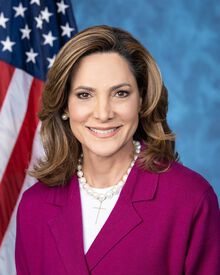 MSMaria Elvira Salazar MSMaria Elvira Salazar | R | House | FL |
Seven members — four Democrats, three Republicans — disclosed Microsoft purchases inside the same 61-day window. Combined disclosed value $1.37M–$2.83M. Convergence, not coordination: committee alignment for this cluster is 0. Verified June 30, 2026.
What makes it notable is not any one buyer but the spread: a progressive senator (Fetterman), a financial-services Democrat (Gottheimer), the senior intelligence-committee Democrat (Warner), and three House Republicans, all landing on the same stock within two months. No committee ties them; no shared catalyst is required. Seven offices, independently, decided spring 2026 was a Microsoft moment.
5. Case study: the Apple six — the same shape, the other party mix
A few months earlier, the identical pattern formed around Apple. Six members bought between December 16, 2025 and February 12, 2026 (a 58-day window), for a combined $355,000 to $825,000 — and this time the most recognizable name in congressional trading, Nancy Pelosi, was in the cluster, alongside a 4-Republican majority.
Table 2 · The Apple six (Dec 16, 2025 – Feb 12, 2026 · combined $355K–$825K)| Member | Party | Chamber | State |
|---|---|---|---|
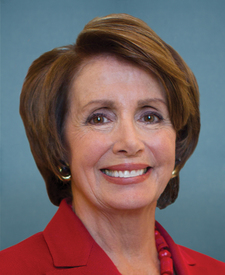 NPNancy Pelosi NPNancy Pelosi | D | House | CA |
 CFCleo Fields CFCleo Fields | D | House | LA |
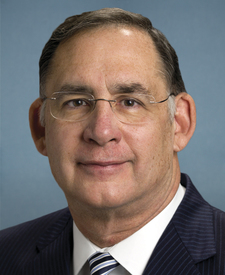 JBJohn Boozman JBJohn Boozman | R | Senate | AR |
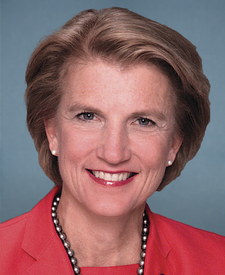 SCShelley Moore Capito SCShelley Moore Capito | R | Senate | WV |
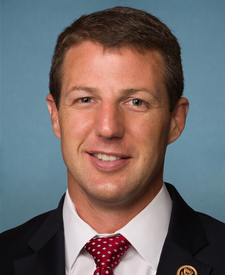 MMMarkwayne Mullin MMMarkwayne Mullin | R | Senate | OK |
 DTDavid J. Taylor DTDavid J. Taylor | R | House | OH |
Two Democrats and four Republicans disclosed Apple purchases inside the same 58-day window. Combined disclosed value $355K–$825K. Committee alignment 0 — convergence, not coordination. Verified June 30, 2026.
6. Convergence, not collusion
It would be easy, and wrong, to read a seven-member herd as a smoke-filled room. The data argue against it in two specific ways. First, committee alignment is zero for these clusters: the members are not concentrated on a committee that would give them a shared, non-public view of Microsoft or Apple. Second, the targets are the most-watched stocks on earth — names where any edge a member might have is swamped by the millions of other eyes on the same ticker. Herds in megacaps look far more like independent convergence on consensus winners than like coordinated, informed bets.
So we make the modest claim and stop there. A herd is a signal — a measurable fact that many members reached the same name in the same window — not an accusation. It is interesting precisely because it is visible, bipartisan, and repeatable, not because it proves intent. Readers who want the stronger conflict-of-interest story will find it in our committee-and-timing work, not here. This is the gentler, and we think more honest, finding: Congress converges, and when it does, it converges to buy.
7. Discussion
The all-bullish result is the quiet headline. Across 65 clusters there is not one coordinated sell, which fits what the compliance and volume data show elsewhere: members accumulate large-cap equities as a default, and the herd is just that default becoming visible when enough offices do it at once. For an observer, the herd is useful as a consensus detector — it tells you which names the political class is comfortable owning — rather than as a market-timing tool. The companion AI Build-Out paper shows the same gravity from a different angle: Microsoft is the single most-held stock in Congress, so it is unsurprising that it also herds the most.
8. Limitations and caveats
- Convergence is not coordination. Zero committee alignment and buy-only clusters mean we read herds as independent convergence, not collusion or insider trading. No causal or intent claim is made.
- Combined value is a bracket sum. STOCK Act amounts are ranges; the “$1.4–2.8M” figures are the summed min and max of disclosed brackets, not exact dollars.
- Windows can overlap. A heavily traded name like Microsoft generates several overlapping clusters across adjacent windows; we report distinct detected clusters and feature the single largest, not a deduplicated member-union.
- Detection is buy-side. The all-bullish result partly reflects that the detector is tuned to convergent purchases; it is not a claim that members never sell, only that they rarely sell in unison the way they buy.
- Membership reflects disclosures, not beneficial intent. Some buys are manager-directed; presence in a herd is a disclosure fact, nothing more.
9. Conclusion
Sixty-five times, a stock drew not one member of Congress but a crowd — and every time, the crowd was buying. The two biggest crowds, around Microsoft and Apple, were bipartisan to the core. None of it required a secret: the herd is just what becomes visible when you line up the disclosures and watch the same megacaps fill up with the same people, quarter after quarter. It isn't proof of anything except a habit. But the habit is the story.
Data availability
Primary source. Herds are derived from congressional Periodic Transaction Reports filed under the STOCK Act, as tracked in GovGreed's Congress database. Cluster detection, scoring, and tiering run in the herd_signals table; each member's underlying purchases are visible on their member page.
Derived dataset. The 65-herd set, the most-herded-ticker counts, and the two case-study member lists are reproducible live on the platform. A machine-readable export of all 65 clusters is available on request — see “Sourcing this for a story?” below.
Reproducibility & verification
This is an independent working paper. Produced by GovGreed Research; not externally peer-reviewed. Every figure — the 65-herd count, the 25 four-plus-member clusters, the all-bullish result, the most-herded tickers, and both case-study rosters — was re-derived live from the production database on the publication date. Member identities were resolved from bioguide_id to name, party, and chamber.
Conflict of interest & funding
GovGreed is a commercial congressional-trading-intelligence platform; GovGreed Research is its analysis function. This paper received no external funding, and no person named in it was given prior review. It uses only public federal records and is released free to read, quote, and reproduce under CC BY 4.0 with attribution. A herd is a convergence signal, not a legal accusation against any individual.
Revision history
v1.0 · 2026-06-30 — Initial publication. All figures derived live from herd_signals and the STOCK Act disclosure set.
Frequently asked
Sourcing this for a story?
Free to use in a thread, article, or video — just credit GovGreed with a link to this page. Want the full 65-herd export, a specific cluster's member list and trade dates, or the herd history for one ticker? Email govgreed@gmail.com — usually 24–48h, free with a link credit.
References & data sources
- STOCK Act disclosures — congressional Periodic Transaction Reports, as tracked in GovGreed's Congress database; per-member history on any member page.
- Herd detection — the
herd_signalsengine; live herd clusters on the signals dashboard. - Methodology — GovGreed Research: sources & methods: deduplication, window detection, and scoring.
- Companion papers — Powering the Machine (why Microsoft is Congress's most-held stock) · The Deregulation Supercut.
- Illustration: GovGreed.
Keep pulling the thread
See the receipts — free
Every herd, every disclosure, scored against the bills and donors behind it. A free account opens today’s strongest signals and predictions, including active herds — no card required.
It’s a live portal, not a page: GovGreed scores thousands of congressional signals and refreshes daily, and the AI assistant pulls the exact trades, bills, and filings behind any claim — just ask.
Not financial advice. All data from public federal disclosures.