The $5,000 Ceiling
Lockheed Martin’s PAC has written 6,750 checks to Congress and not one of them was over $5,000. Neither has Boeing’s, or Northrop’s, or Pfizer’s, or Exxon’s — not once in 41,828 transactions. The crypto industry put $40.1 million into a single Senate seat. Both obeyed the law. The difference isn’t the industry. It’s the filing category.
The mental image of corrupt money in Washington is a defense contractor writing a check. We matched seven interest-group PAC families to their Federal Election Commission committee IDs and summed every transaction across the four completed cycles from 2018 to 2024. Nine defense-contractor PACs — Lockheed Martin, Boeing, Northrop Grumman, RTX, General Dynamics, L3Harris and affiliates — spent $38.8 million across 26,571 transactions, reaching 780 candidates. Average check $1,462. Median $1,000. Largest single transaction in seven years: exactly $5,000. Across those nine PACs plus six pharmaceutical PACs and five oil-and-gas PACs — 41,828 transactions — there is not one above $5,000, and not one dollar of advertising. That is the statutory limit on what a multicandidate committee may give a candidate per election. These are the most constrained donors in American politics. They can ask. That is all they can do.
The crypto industry’s super PAC network spent $133.1 million in a single cycle across 247 transactions — 100 percent of it advertising, largest single transaction $12,000,000, or 2,400× the ceiling that binds Lockheed Martin. $40.1 million of it went to one Senate seat, supporting Bernie Moreno against Sherrod Brown — who chaired the Senate Banking Committee and had blocked crypto legislation for years. Brown lost. Crypto spent more on that one seat than all nine defense-contractor PACs spent on the entire Congress across four cycles. And the control that rules out “crypto is just more aggressive” sits inside the crypto data itself: Coinbase’s own corporate PAC gave $120,000 across 82 transactions, never exceeded $2,900, and never ran a single advertisement — behaving exactly like Lockheed’s, because it is exactly the same instrument. The same industry runs both models at once. The variable is not ethics, or sector, or appetite. It is a filing category.
- Key findings
- Zero of 41,828. Across nine defense-contractor PACs, six pharma PACs and five oil-and-gas PACs, 2018–2024, not one transaction exceeds $5,000 and not one dollar is advertising. The cap isn't approximately respected. It is absolutely binding.
- The nine defense PACs total $38.8M over 26,571 transactions and four cycles — average $1,462, median $1,000 — spread across 780 candidates.
- The crypto super PACs spent $133.1M in 247 transactions, 100% independent expenditure, largest single transaction $12,000,000.
- $40.1M went to one Senate seat in ten transactions — supporting Bernie Moreno against Sherrod Brown, who chaired the committee with jurisdiction over crypto legislation. That is more than all nine defense PACs spent on all of Congress since 2018.
- The control is inside the same industry. Coinbase Innovation PAC: $120,000, 82 transactions, max $2,900, zero advertising, 63 candidates. Identical in shape to Lockheed's. The instrument is the variable, not the industry.
- The pro-Israel PAC family sits between the two models: $90.4M, 89.3% advertising, but 9,561 transactions with a $500 median — it does both at once.
1. The most constrained money in Washington
Ask anyone to picture the corruption of American politics and they will describe a defense contractor writing a cheque to a senator. It is the founding image of the military-industrial complex, and it survives because it feels obviously true.
Here is what the record actually says. Lockheed Martin Employees PAC gave $7.57 million to congressional candidates between 2018 and 2024. It did so in 6,750 separate transactions, to 671 candidates. Its largest single transaction across those seven years is $5,000. So is Boeing’s. So is Northrop’s, RTX’s, General Dynamics’, L3Harris’. Pfizer’s. ExxonMobil’s.
Not approximately $5,000. Exactly $5,000, and never a dollar more — because federal law caps what a multicandidate committee may give a candidate at $5,000 per election, and a corporate PAC is precisely that. Across the nine defense PACs, the six pharma PACs and the five oil-and-gas PACs in this analysis — 41,828 transactions — the number of exceptions is zero.
They also never advertise. Not once. Every dollar in those 41,828 rows is a direct contribution to a campaign.
2. Data and methodology
Every figure here comes from Federal Election Commission PAC transaction records. We hold a mapping of interest-group families to FEC committee IDs — seven groups, from nine defense-contractor PACs down to a single J Street committee — and joined it to the transaction table for the four completed cycles: 2018, 2020, 2022, 2024. Cycles in progress are excluded, because a half-counted cycle would understate whichever group spends late.
The crucial split is by transaction type, and it is what most coverage of campaign money misses. FEC records distinguish a direct contribution to a candidate’s committee from an independent expenditure — money spent on advertising, for or against, without coordination. Types 24E and 24C are expenditure for a candidate; 24A and 24F are against. Everything else is a contribution. Summing them together, as the phrase “money in politics” usually does, hides exactly the distinction this paper is about. The directional half of that split is the subject of the companion paper, GGR-WP-2026-17.
Scope discipline. These are mapped committee families, not exhaustive industry censuses. The claims here are about nine named defense-contractor PACs and four named crypto committees, and should not be restated as “the defense industry” or “the crypto industry.” The pattern is strong enough that it does not need the inflation.
3. The receipts: two shapes of money
Table 1 is the whole mapped universe, and the shape of each row matters more than its total.
Table 1 · Seven interest-group PAC families, 2018–2024 completed cycles| Group | Transactions | Total | Avg check | Biggest single | % advertising | Candidates |
|---|---|---|---|---|---|---|
| Crypto (4 PACs) | 329 | $133.1M | $404,659 | $12,000,000 | 99.9% | 112 |
| Pro-Israel (4 PACs) | 9,561 | $90.4M | $9,450 | $2,429,112 | 89.3% | 630 |
| Defense (9 PACs) | 26,571 | $38.8M | $1,462 | $5,000 | 0.0% | 780 |
| Oil & gas (5 PACs) | 6,567 | $15.6M | $2,370 | $5,000 | 0.0% | 620 |
| Pharma (6 PACs) | 8,690 | $15.5M | $1,784 | $5,000 | 0.0% | 606 |
| J Street (1 PAC) | 8,402 | $4.0M | $478 | $6,700 | 0.0% | 291 |
FEC PAC transactions joined to a mapped committee-family list, four completed cycles 2018–2024. “% advertising” is the share of dollars in transaction types 24E/24C/24A/24F (independent expenditure); the remainder is direct contributions. The AIPAC-only subset of the pro-Israel family ($72.6M, 7,952 transactions, 88.1% advertising) is omitted from this table because it is contained within the pro-Israel row. Verified July 15, 2026.
Read down the “biggest single” column and the paper is already over. Three groups stop dead at $5,000. One group reaches $12 million. There is no gradient between them, because there is no gradient in the law: a contribution is capped and an independent expenditure is not.
The two models are not more and less of the same thing. They buy different objects. $1,462, 26,571 times, to 780 candidates is a strategy of being known to everyone who might ever chair anything — it purchases a returned phone call. $404,659, 329 times, to 112 candidates is not about relationships at all. It is advertising, and advertising does not ask a member for anything. It changes which member there is.
4. The control: the same industry runs both models
The obvious objection to everything above is that crypto is simply a more aggressive industry than defense — younger, richer, less house-trained. If that were the explanation, the paper would be about culture, and culture is not measurable here.
It is not the explanation, and the reason is sitting inside the crypto data.
Table 2 · The four crypto committees — same industry, two instruments| Committee | Type | Transactions | Total | Biggest single | Ads | Candidates |
|---|---|---|---|---|---|---|
| Defend American Jobs (Fairshake affiliate) | Super PAC | 65 | $57.82M | $12,000,000 | 65 / 65 | 20 |
| Fairshake | Super PAC | 84 | $40.66M | $3,600,389 | 84 / 84 | 30 |
| Protect Progress (Fairshake affiliate) | Super PAC | 98 | $34.54M | $4,098,603 | 98 / 98 | 21 |
| Coinbase Innovation PAC | Corporate PAC | 82 | $0.12M | $2,900 | 0 / 82 | 63 |
FEC PAC transactions, 2018–2024 completed cycles. The three super PACs transact only in the 2024 cycle; the Coinbase Innovation PAC spans 2022–2024. Fairshake and its affiliates are funded by Coinbase, Ripple Labs and Andreessen Horowitz per contemporaneous reporting; that funding relationship is an external fact, not derived from this table. Verified July 15, 2026.
Coinbase runs a corporate PAC. It gave $120,000 across 82 transactions, never exceeded $2,900, spread itself across 63 candidates, and ran zero advertisements. Put that row next to Lockheed Martin’s and you cannot tell them apart. Same shape, same discipline, same order of magnitude, same ceiling.
And in the same cycles, per contemporaneous reporting, Coinbase was among the principal funders of Fairshake — whose network spent $133.1 million.
5. One seat, forty million dollars
The abstraction becomes concrete in Ohio.
In the 2024 cycle, the crypto super PAC network spent $40.1 million — in ten transactions — supporting Bernie Moreno in the Ohio Senate race. The five largest are $12,000,000, $7,621,588, $7,619,740, $7,053,693 and $5,734,682, all filed as independent expenditure for the candidate, all by Fairshake’s affiliate Defend American Jobs, between August and September 2024.
His opponent was Sherrod Brown, who chaired the Senate Banking Committee — the committee with jurisdiction over crypto legislation — and had kept such legislation from advancing for years. Brown lost the seat.
Hold the two mechanisms side by side, because they are not the same act performed at different volumes. A $5,000 contribution is a request made to a chairman who already holds the gavel. $40.1 million of advertising does not make a request. It participates in deciding who holds the gavel.
Nothing in that paragraph is an allegation. Every dollar was reported to the FEC exactly as required. Moreno is not accused of anything; independent expenditure is by definition money a candidate cannot coordinate with and does not control. That is the point. The most consequential money in the system is money the beneficiary is legally forbidden to touch.
6. What the ceiling actually separates
The $5,000 cap is usually discussed as a limit on corruption. On this evidence it is better described as a limit on a method — and the method it limits is the polite one.
What survives the cap is Lockheed’s model: thousands of small, legal, disclosed cheques, spread across two thirds of Congress, cultivating access over decades. What routes around the cap is a different product entirely, and it is available to anyone with money and a lawyer. The pro-Israel family in Table 1 shows both being run at once by the same family of committees: $90.4M, 89.3% of it advertising, but across 9,561 transactions with a $500 median — retail donations and mass advertising in the same portfolio.
Which means the reform instinct points at the wrong object. Tightening the contribution limit further would bind Lockheed, Pfizer and Exxon — already the most compliant money in the record, already incapable of writing a cheque bigger than a used car. It would not touch the $12 million transaction at all, because that transaction is not a contribution.
7. Limitations and caveats
Mapped families, not censuses. Nine defense PACs, six pharma, five oil-and-gas, four crypto, four pro-Israel, one J Street. Real industries have more committees than that. Every claim here is scoped to the named committees, and the paper deliberately does not say “the defense industry.”
Cycle coverage differs by group and it flatters crypto’s per-cycle intensity. The defense, pharma, oil-and-gas and J Street PACs span all four cycles (2018–2024). The crypto super PACs transact only in 2024 — they did not exist earlier. So “$133.1M vs $38.8M” compares one cycle against four. That asymmetry makes the contrast larger, not smaller, and it is stated here rather than buried: crypto spent 3.4× the defense total in a quarter of the time.
This is one channel. PAC money is not lobbying expenditure, revolving-door hiring, trade-association spending, dark money routed through 501(c)(4)s, or the jobs-in-the-district politics that does most of the real work in defense procurement. The finding is narrow: on this channel, defense money is small, capped, thin and silent. Concluding that defense contractors lack influence would be a misreading of a deliberately narrow measurement.
The $5,000 figure is a per-election statutory limit, and primaries and generals are separate elections, so a committee may lawfully give the same candidate $5,000 more than once in a cycle. The finding is not that any PAC gave only $5,000 in total — it is that no single transaction in 41,828 exceeds it, which is what makes the $12,000,000 row so visible.
Fairshake’s funders are an external fact. That Coinbase, Ripple Labs and Andreessen Horowitz are among the principal funders comes from contemporaneous reporting, not from this dataset. The Coinbase Innovation PAC control in section 4 does not depend on it: that row stands on its own as a crypto corporate PAC behaving identically to a defense corporate PAC.
8. Conclusion
Lockheed Martin has spent four cycles and 6,750 cheques learning to be liked by Congress, and it has never once been allowed to hand a member more than $5,000. That is not a loophole. That is the law working exactly as designed, on the one kind of money the law was designed for.
In one cycle, an industry with no federal contracts and no procurement relationship spent $133 million, put $40.1 million into a single Senate seat, and unseated the chairman of the committee that governed it. It never violated the ceiling. It never approached the ceiling. The ceiling was not in the room.
The story of money in American politics is usually told as a story about who is greedy. It is better told as a story about which form you file. The most constrained money belongs to the industry with the most at stake, and the least constrained money belongs to whoever hired the better lawyer.
Data availability
Primary source. Federal Election Commission PAC transaction records, joined to a mapped list of interest-group committee families by FEC committee ID. Four completed cycles: 2018, 2020, 2022, 2024. Transaction types 24E and 24C are independent expenditure for a candidate; 24A and 24F are against; all other types are treated as direct contributions.
Not from the dataset. That Sherrod Brown chaired the Senate Banking Committee and had blocked crypto legislation, and that Coinbase, Ripple Labs and Andreessen Horowitz are among Fairshake's principal funders, come from contemporaneous reporting. The $5,000 per-election limit on multicandidate committee contributions is statute. These are labelled as external throughout. A machine-readable export of the group-family sums is available on request.
Reproducibility & verification
This is an independent working paper. Produced by GovGreed Research; not externally peer-reviewed. Every figure in Tables 1 and 2 — the 26,571 defense transactions and $38.8M total, the $5,000 maximum, the zero exceptions across 41,828 capped-PAC transactions, the zero advertising rows, the crypto $133.1M / 247 transactions / $12,000,000 maximum, the Coinbase Innovation PAC's $120,000 / 82 / $2,900 / zero ads, and the per-PAC breakdowns — was derived live and verified as of July 15, 2026.
Pinned parameters. Cycles restricted to the four completed cycles (2018, 2020, 2022, 2024); in-progress cycles are excluded. Groups are the mapped committee families, joined on FEC committee ID. Percentages of advertising are dollar-weighted, not transaction-weighted.
External check, twice, to the dollar. Our derivation gives $40.1M of crypto super PAC spending on the Ohio Senate candidate; contemporaneous reporting independently gives $40,100,000 for Defend American Jobs supporting Bernie Moreno against Sherrod Brown. Our crypto family total is $133.1M; the same reporting describes the Fairshake network as spending more than $133 million in the 2024 cycle. Neither figure was taken from the reporting — both were derived from the FEC data first and matched afterwards.
A note on what this paper does not sum. It never uses campaign_contributions.amount, which is a mis-attributed global firehose and produces meaningless totals. All figures come from per-transaction FEC PAC records, split by direction and instrument, as established in GGR-WP-2026-17.
Conflict of interest & funding
GovGreed is a commercial congressional-trading-intelligence platform; GovGreed Research is its analysis function. This paper received no external funding, and no organisation named here was given prior review. It uses only public federal records and public reporting, and is released free to read, quote, and reproduce under CC BY 4.0 with attribution. Nothing here alleges wrongdoing by anyone. Every dollar described was disclosed to the FEC exactly as the law requires. The defense, pharma and oil-and-gas PACs are shown to be in complete compliance with the contribution ceiling — that compliance is the finding. Bernie Moreno is not accused of anything; independent expenditure is by definition money a candidate can neither coordinate with nor control, and the paper's argument depends on that fact rather than obscuring it. Sherrod Brown is named because he held the relevant gavel and lost the seat, both matters of public record. The finding is about the legal architecture of campaign money, not about any person's conduct.
Revision history
v1.0 · 2026-07-15 — Initial publication. All PAC-family sums, per-committee breakdowns, maxima and advertising shares derived live and verified as of July 15, 2026, and independently corroborated at two points by contemporaneous reporting ($40.1M on the Ohio race; $133M+ for the Fairshake network). Scope note recorded at publication: an earlier framing of this analysis described the defense row as “the defense industry.” It is nine named contractor PACs. The distinction is kept throughout because the finding is strong enough without the inflation, and because a reader checking “the defense industry” against a broader committee list would find a different number and be right to.
Frequently asked
Sourcing this for a story?
Every figure is reproducible from FEC PAC transaction records; the committee-family mapping, the cycle restriction and the transaction-type split are all stated in section 2. Machine-readable exports of the group sums and the per-committee breakdown are available to journalists on request. Please preserve the scope: these are nine named defense-contractor PACs, not the defense industry. Methods across the series are documented at /research.
References & data sources
- FEC PAC transaction records — all transactions by the mapped committee families across the 2018, 2020, 2022 and 2024 completed cycles, split by transaction type (24E/24C = expenditure for; 24A/24F = expenditure against; all else = direct contribution).
- Contribution limits — the $5,000 per-election ceiling on what a multicandidate committee may give a candidate is statutory; primaries and generals count separately.
- Companion paper — the directional half of the same FEC split (money spent to defeat sitting members vs to support them) is GGR-WP-2026-17, The Money Against You.
- Contemporaneous reporting — for the Fairshake network's funders (Coinbase, Ripple Labs, Andreessen Horowitz), the $40.1M spent by Defend American Jobs supporting Bernie Moreno against Sherrod Brown, the $133M+ network total for the 2024 cycle, and Brown's chairmanship of the Senate Banking Committee. External claims, not derived from our dataset — and the two dollar figures independently match our derivation.
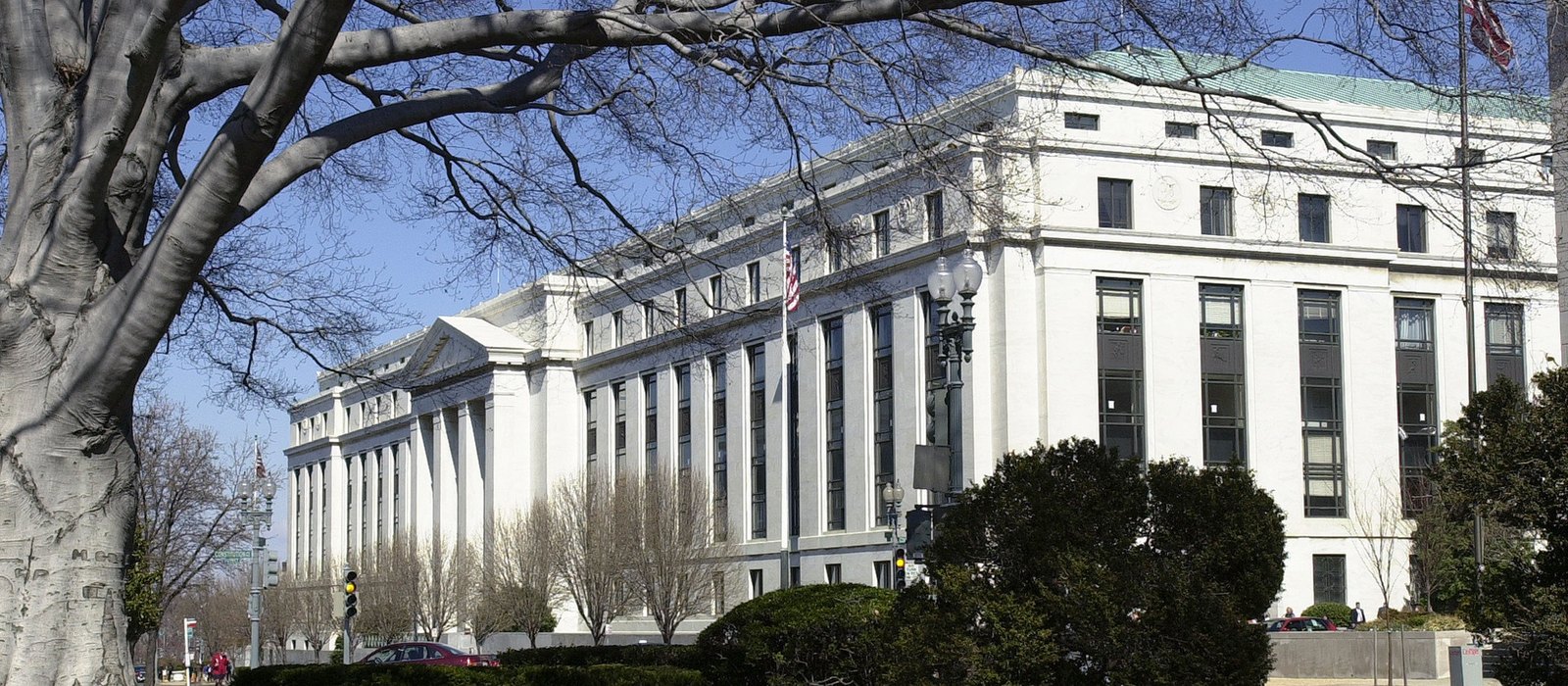
- Image credit — Dirksen Senate Office Building — Architect of the Capitol, public domain, via Wikimedia Commons.
Keep pulling the thread
Every disclosure, every trade, every bill — cross-referenced.
Start Free — See Today's Top 10 SignalsNot financial advice. All data from public federal disclosures.