Government as Venture Capitalist
For decades the U.S. government bought from companies and subsidized them. Recently it started buying into them. This paper catalogs an emerging instrument of industrial policy — federal grants, loans, and now equity in publicly traded firms — and the moment it crossed a line: in 2025 the Department of Defense became a major shareholder of MP Materials. The state is moving up the capital stack, from customer to creditor to owner.

This paper catalogs and analyzes a new instrument in U.S. industrial policy: the federal government taking direct positions — grants, loans, and increasingly equity — in publicly traded companies. Across seven marquee deals (2024–2026) the government committed roughly $41.5 billion: about $21.5B in grants, $19.6B in loans, and $0.4B in direct equity. The analytically important shift is up the capital stack. The CHIPS Act delivered grants and loans to Intel, TSMC, and Micron; then, in July 2025, the Department of Defense bought $400M of preferred stock in MP Materials — the first time the federal government became a major shareholder of a publicly traded critical-minerals company — and in January 2026 the Commerce Department took an 8–16% equity stake in USA Rare Earth. The trend spans administrations, and it intersects this series' recurring motif: members of Congress, and the President, personally hold several of the companies the government now funds. This is a curated catalog of the defining deals, not an exhaustive census; the data class is young and growing.
- Key findings
- ~$41.5B committed across seven deals: $21.5B grants, $19.6B loans, $0.4B equity.
- The line crossed: in 2025 the DoD bought $400M of MP Materials preferred stock — the federal government as a major shareholder of a critical-minerals firm for the first time.
- USA Rare Earth (Jan 2026): Commerce took an 8–16% equity stake plus a $1.3B loan and a $277M grant.
- The backbone is CHIPS: Intel (~$19.5B grant + loans), TSMC (~$11.6B), Micron ($6.1B).
- The overlap returns: 68 members of Congress hold Intel, 33 hold TSMC, 29 hold Micron — and the President holds Intel and Micron too.
1. Introduction: from customer to owner
The U.S. government has always been the largest customer in the American economy — the subject of this series' companion paper on federal contracts. It has also long subsidized favored industries through grants and loan guarantees. What is new, and what this paper documents, is a third posture: the government as equity holder — taking an ownership stake in a publicly traded company, sitting on the same capitalization table as private shareholders.
The research question is descriptive: what direct federal positions in public companies exist, how are they structured, how large are they, and who else owns the same firms? The answer traces an escalation. Grants and loans — money given or lent — leave ownership untouched. Equity does not: it makes the taxpayer a shareholder, with upside, downside, and a governance interest. The seven deals below show the government taking each of these steps in turn, culminating in the first direct equity purchases. The pattern is bipartisan and, so far, small — but it is a genuine change in kind, not degree.
It is worth saying immediately what this is not. It is not the 2008 playbook. The TARP-era equity stakes in AIG, General Motors, and the banks were emergency rescues of failing firms — taken reluctantly, at the brink of collapse, and unwound as fast as politically possible. The 2025–26 stakes are the inverse: proactive, strategic positions in sectors the government has decided must exist on American soil, taken in a calm market with no crisis forcing its hand and no exit timetable attached. The government is not bailing out. It is buying in.
2. Data and methodology
This is a curated catalog, not a statistical census. We track the marquee federal grant, loan, and equity positions in publicly traded companies that have been publicly announced and are large or structurally novel enough to define the category. For each deal we record the recipient ticker, the awarding agency and program, the instrument type, the committed amounts by instrument (grant / loan / equity), and — where the company is liquid enough — the 30-day stock reaction around the announcement. Sources are the agencies' own announcements and, where applicable, the recipient's SEC 8-K filings.
Two scope notes. First, the universe is deliberately small: seven defining deals, not every minor grant. The category is young, and Section 9 is explicit that this is a seed, not a complete list. Second, “committed” capital is the announced ceiling by instrument, which differs from cash disbursed; loans and grants are frequently milestone-gated. The method shared across this series is documented at GovGreed Research. Figures were verified live on June 30, 2026.
3. The catalog
Ranked by total committed capital, the seven deals span two agencies of subsidy (Commerce's CHIPS program, the DOE loan office) and two of strategic ownership (the DoD and Commerce's critical-minerals efforts). Intel dominates by size; MP Materials and USA Rare Earth dominate by novelty.
Table 1 · Federal direct positions in public companies (2024–2026)| Company | Ticker | Agency | Program | Instrument | Committed |
|---|---|---|---|---|---|
| INTC | Commerce | CHIPS Act | Grant + loan | ~$19.5B | |
| TSM | Commerce | CHIPS Act | Grant + loan | ~$11.6B | |
| MU | Commerce | CHIPS Act | Grant | $6.1B | |
| LAC | DOE | ATVM Loan | Loan | $2.26B | |
| USAR | Commerce | Critical Minerals | Equity 8–16% + loan + grant | ~$1.6B | |
| MP | DoD | OSC + DPA Title III | Equity (preferred + warrants) | $0.40B | |
| UCORE | DoD | DPA Title III | Grant | $0.02B |






Committed = announced ceiling across grant, loan, and equity instruments. Verified June 30, 2026. Tap any ticker to see who in Congress holds it.
Figure 1 · Committed capital by instrumentThe instrument mix is itself the story. Equity is a rounding error by dollars — $0.4B against $41B — yet it is the entire reason this paper exists. Grants and loans are decades-old tools; an ownership stake in a listed company is not. The small equity number is a beginning, not a footnote.
4. The line crossed: MP Materials and USA Rare Earth
In July 2025 the Department of Defense purchased $400 million of preferred stock, plus warrants, in MP Materials (MP), the operator of the only operating rare-earth mine in the United States. The structure matters: preferred equity and warrants are ownership instruments, not subsidies. With the purchase, the federal government became, by reported accounts, the company's largest shareholder.
Six months later, in January 2026, the Commerce Department went further structurally with USA Rare Earth (USAR): an 8–16% equity stake alongside a $1.3B loan and a $277M grant — a single package combining all three instruments at once, ownership included. Together, MP and USAR establish the template: for assets the government deems strategically essential (here, rare-earth supply), it is now willing to hold the equity, not merely fund the operation.
5. The CHIPS backbone
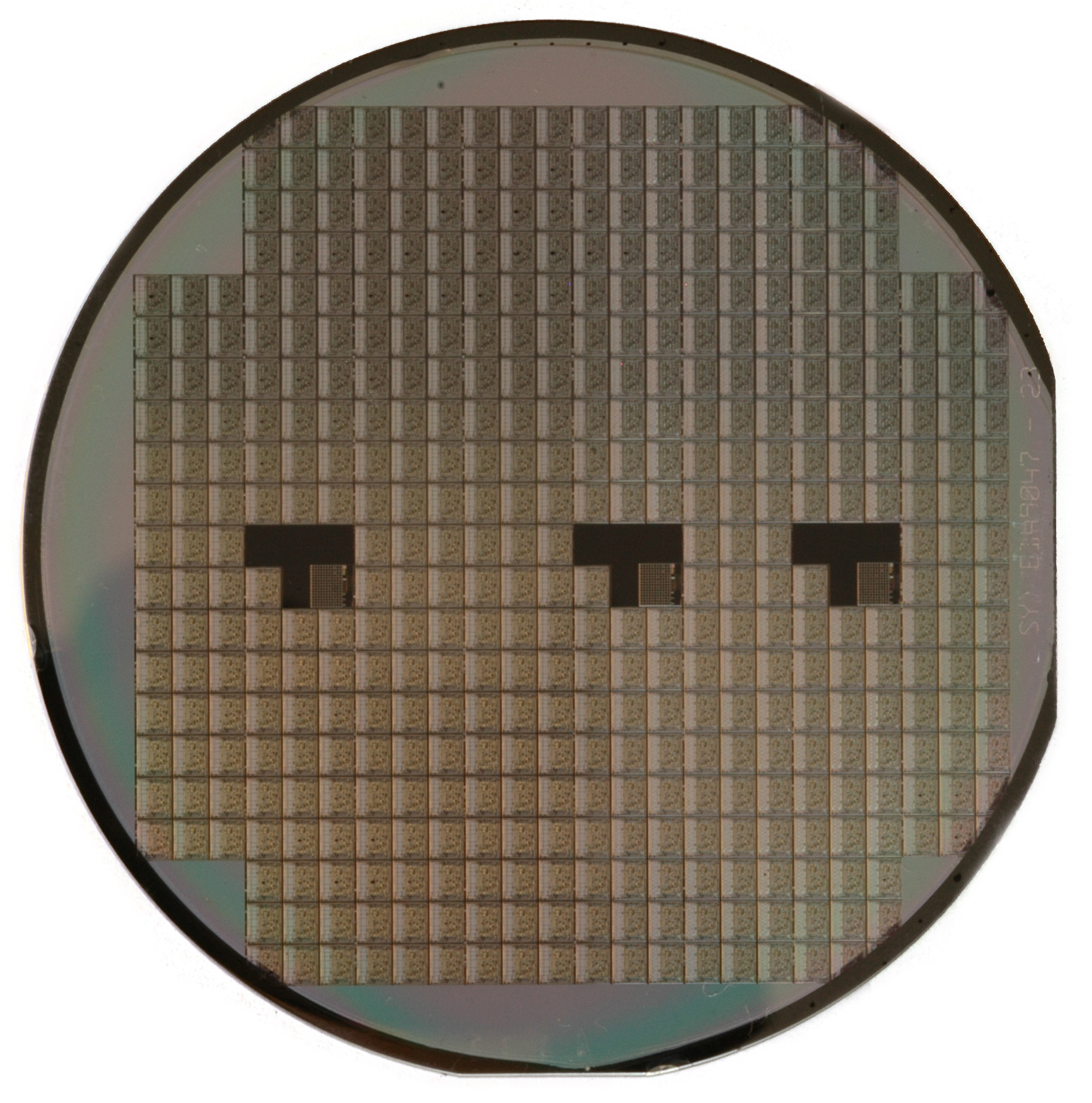
The equity deals are novel; the money still overwhelmingly flows through the CHIPS Act's grants and loans, and those predate the equity turn. Intel is the largest single recipient in the catalog — about $8.5B in direct grants and up to $11B in loans for U.S. fabrication plants. TSMC's Arizona fabs drew a $6.6B grant and up to $5B in loans; Micron took $6.1B for New York and Idaho. These awards were announced in 2024, under the prior administration; the equity moves (MP, USAR) came in 2025–26 under the current one. The throughline — that Washington is willing to put its balance sheet behind chosen domestic producers — runs across both, which is why we treat the trend as institutional rather than partisan.
6. The overlap returns
The motif that runs through this entire series reappears here, and it is worth stating plainly because it is the reason a trading-intelligence platform is the one documenting industrial policy. The companies the government is funding are the same companies its officials own. Among the catalog, Intel appears in 68 members' disclosures, TSMC in 33, and Micron in 29. And the pattern reaches the top of the executive branch: the President's own OGE disclosure — the subject of our companion paper — lists both Intel and Micron.
Figure 2 · Members of Congress holding the funded companiesAs elsewhere in this series, the overlap is a disclosed conflict-of-interest pattern, not proof that any holding influenced any decision. But the structure is now unusually tight: when the government takes an equity stake in a company that members of Congress and the President also own, public and private shareholdings sit in the same security at the same time.
7. A note on market reaction
Where the recipient is liquid enough to read, the 30-day stock reaction to these announcements is mixed and small-sample — and we draw no causal conclusion from seven events. Micron rose roughly +17% in the 30 days after its CHIPS grant and TSMC about +8.5%; Intel fell about 29% over its window, swamped by company-specific troubles unrelated to the award. The takeaway is the absence of a takeaway: a federal grant is not a reliable catalyst, and treating one as a trade would be unsupported by this evidence. We include the reaction only for completeness, with the caveat in bold.
8. Discussion
“Government as venture capitalist” is a useful label only if its limits are stated. By dollars, this is still a grant-and-loan program with a sliver of equity. But instruments shape incentives, and equity is different in kind: it gives the state upside in a company's share price, downside in its losses, and a latent governance interest in a firm it simultaneously regulates, buys from, and now part-owns. That triple role — regulator, customer, shareholder — is the conflict surface worth watching as the category grows.
It also reframes the series' central finding. The contracts paper showed the government as the economy's biggest buyer; the checkbook paper showed its officials owning the firms it pays. This paper adds a third leg: the government itself becoming an owner of those same firms. Buyer, regulator, and shareholder are converging on the same small set of strategically important companies — and the people who run all three branches of that relationship hold the stock.
9. Limitations and caveats
- This is a curated catalog, not a census. Seven defining deals, selected for size or structural novelty. Smaller grants, loan guarantees, and pre-2024 actions are out of scope; the true universe of federal positions is larger. The data class is new and being expanded.
- “Committed” ≠ disbursed. Amounts are announced ceilings by instrument; grants and loans are typically milestone-gated and may be revised or clawed back.
- Equity terms are evolving. The MP preferred/warrant structure and the USA Rare Earth 8–16% range are as reported at announcement; final ownership percentages can shift with conversions and milestones.
- Market reaction is not causal. Seven events, confounded by company-specific news (Intel especially). No trading inference should be drawn.
- Ownership ≠ wrongdoing. Congressional and presidential holdings in these names are disclosed and legal; the overlap is a conflict-of-interest pattern, not proof any holding shaped any award.
10. Conclusion
For most of its history the federal government related to public companies in two ways: it bought from them and it subsidized them. In 2025 it added a third — it began to own them, starting with $400 million of MP Materials preferred stock and an equity stake in USA Rare Earth. The sums are still small and the catalog still short, which is precisely why it is worth marking now, at the beginning. The government is climbing the capital stack toward ownership of the companies it also regulates, buys from, and whose shares its own officials hold. GovGreed is documenting the first rungs.
Data availability
Primary sources. Deal terms derive from the awarding agencies' public announcements (Commerce/CHIPS, DoD, DOE Loan Programs Office) and, where applicable, the recipients' SEC 8-K filings. Congressional holdings derive from STOCK Act disclosures; the presidential holding from OGE filings (see the companion paper). The 30-day reactions use end-of-day prices.
Derived dataset. The catalog is maintained by GovGreed and queryable live; the mapping and verification method shared across the series is documented at GovGreed Research. An expanded list and per-deal detail are available on request — see “Sourcing this for a story?” below.
Reproducibility & verification
This is an independent working paper. It is produced by GovGreed Research and has not undergone external academic peer review. Every figure was re-derived live from the production database on the publication date against the primary announcements, and congressional/presidential ownership was re-counted with COUNT(DISTINCT ...). Because the catalog is small and curated, we are explicit (Section 9) that it is a seed of an emerging category, not a complete census.
Conflict of interest & funding
GovGreed is a commercial congressional-trading-intelligence platform; GovGreed Research is its analysis function. This paper received no external funding, and no entity named in it was given prior review. It uses only public records and is released free to read, quote, and reproduce under CC BY 4.0 with attribution. Nothing here is a legal accusation against any individual or company.
Revision history
v1.1 · 2026-06-30 — Refinement: hero replaced with the Mountain Pass mine (the literal asset of the DoD equity deal); silicon-wafer image moved to the CHIPS section; added the framing contrast with the 2008 TARP rescues (“buying in, not bailing out”).
v1.0 · 2026-06-30 — Initial publication. Seven-deal catalog; figures and ownership counts verified live.
Frequently asked
Sourcing this for a story?
Free to use in a thread, article, or video — just credit GovGreed with a link to this page. Want the full deal catalog, per-deal terms, or the congressional-ownership cross-reference for any recipient? Email govgreed@gmail.com — usually 24–48h, free with a link credit.
References & data sources
- Agency announcements — U.S. Department of Commerce (CHIPS Program Office; critical-minerals), Department of Defense (Office of Strategic Capital; DPA Title III), DOE Loan Programs Office.
- SEC 8-K filings — recipient material-event disclosures for the equity and loan agreements (MP Materials, USA Rare Earth, others).
- Congressional holdings — STOCK Act disclosures via GovGreed's Congress database; per-ticker at who in Congress owns a stock.
- Presidential holdings — OGE disclosures, analyzed in The President's Checkbook.
- Methodology — GovGreed Research: sources & methods.
- Image credit (public domain): silicon wafer — public domain via Wikimedia Commons.
Keep pulling the thread
See the receipts — free
Every federal dollar — contract, grant, loan, or equity stake — set against the members of Congress who hold the stock. A free account opens today’s strongest signals and predictions — no card required.
It’s a live portal, not a page: GovGreed scores thousands of congressional signals and refreshes daily, and the AI assistant pulls the exact trades, bills, and filings behind any claim — just ask.
Not financial advice. All data from public federal disclosures.