Brian Schatz's Net Worth: $3.2M, Line by Line
Sen. Brian Schatz (D-HI) filed a 2026 financial disclosure listing $4.9M in assets across 31 line items and $1.8M in liabilities. That is a net-worth midpoint of $3.2M (range -$138K to $6.5M). Congress reports brackets, not balances, and never counts the house. We show the money; you draw the conclusions.
Not one disclosed stock trade. Whatever else the filing shows, there is no transaction record to time against legislation.
The Filing Every Member Has to Make
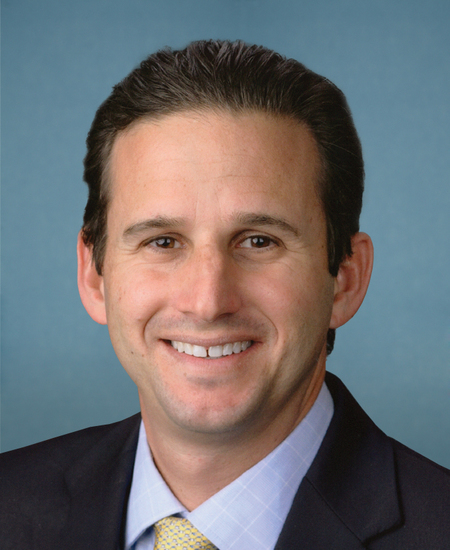
Under the STOCK Act, every member of Congress files an annual Personal Financial Disclosure — a list of assets, debts and outside income, each in a value bracket — plus a periodic transaction report for every trade. We parsed Sen. Brian Schatz's report and put the filing itself behind every number on this page.
How Much Is Brian Schatz Worth?
Taking the midpoint of every disclosed bracket, the 2026 filing shows $4.9M in assets against $1.8M in liabilities — a net-worth midpoint of $3.2M (range -$138K to $6.5M). Because the form reports ranges, the honest way to read it is the range: somewhere between -$138K and $6.5M, excluding real estate.
That ranks #162 of 453 members with a filed disclosure, richer than 64% of Congress, 2.2× the median member, and 18× the $174,000 congressional salary. Congressional pay has not changed since 2009, which is why the salary multiple is the number that travels: it is the gap between what the job pays and what the people doing it are worth.
The Largest Disclosed Holdings
The biggest line items on the 2026 filing, by disclosed bracket. Congressional disclosures report a range, never an exact figure — so these are the brackets as filed, not marks.
| Holding | Asset class | Disclosed value |
|---|---|---|
| Residential PropertyDescription: Residential Real Estate (Honolulu, HI) | Real estate | $1.0M–$5.0M |
| Osceola Mill Bed & Breakfast Inn & CabinDescription: Bed & Breakfast (Vesuvius, | Real estate | $500K–$1.0M |
| Enrollment Year Portfolio Passive | Mutual funds | $250K–$500K |
| Residential PropertyDescription: Residential Real Estate (Washington, DC) | Real estate | $250K–$500K |
| Investment in Residential PropertyDescription: Residential Property (Wailuku, HI | Real estate | $50K–$100K |
| Mutual of America - Fidelity Investments VIP Contrafund | Mutual funds | $50K–$100K |
The Debts
| Creditor | Type | Disclosed amount |
|---|---|---|
| Rocket Mortgage Detroit, MI | Mortgage | $500K–$1.0M |
| Virginia Small Business Finance Authority Richmo | Other (Business Loan) | $250K–$500K |
| LINK Bank Reston, VA | Other (Business Loan) | $250K–$500K |
| Rocket Mortgage Detroit, MI | Mortgage | $100K–$250K |
What Brian Schatz Legislates
A net-worth figure on its own says nothing. What makes a congressional disclosure worth reading is the overlap between what someone owns and what their committees decide. Sen. Brian Schatz sits on 5 full committees and 13 subcommittees.
They are ranking of State, Foreign Operations, and Related Programs. A gavel is the sharpest form of jurisdiction there is.
| Committee | Level | Role |
|---|---|---|
| Senate Committee on Appropriations | Full committee | Member |
| Senate Committee on Commerce, Science, and Transportation | Full committee | Member |
| Senate Committee on Foreign Relations | Full committee | Member |
| Senate Committee on Indian Affairs | Full committee | Member |
| Senate Select Committee on Ethics | Full committee | Member |
| Coast Guard, Maritime, and Fisheries | Subcommittee | Member |
| Commerce, Justice, Science, and Related Agencies | Subcommittee | Member |
| Consumer Protection, Technology, and Data Privacy | Subcommittee | Member |
| Department of Defense | Subcommittee | Member |
| Departments of Labor, Health and Human Services, and Education, and Related Agencies | Subcommittee | Member |
| East Asia, the Pacific, and International Cybersecurity Policy | Subcommittee | Member |
| Europe and Regional Security Cooperation | Subcommittee | Member |
Do They Trade Individual Stocks?
No. GovGreed has no disclosed STOCK Act transactions for Sen. Brian Schatz. Their wealth, whatever its size, does not come with a transaction record to time against legislation — which is the whole question this site exists to ask.
Brian Schatz Net Worth FAQ
Keep Reading



Not financial advice. All data from public federal disclosures.