Bill Cassidy's Net Worth: What the Disclosure Actually Shows
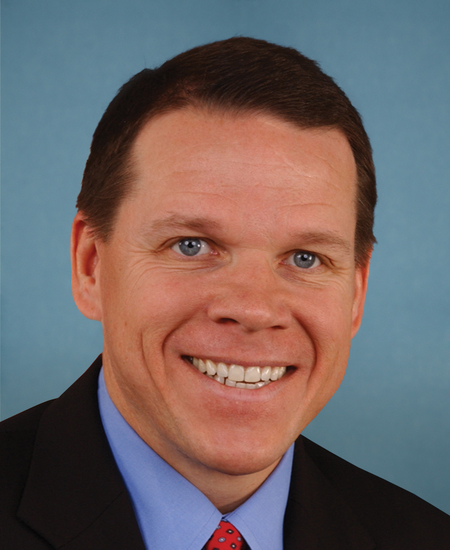
Sen. Bill Cassidy (R-LA) filed a 2026 financial disclosure listing $212K in assets across 18 line items and $1.5M in liabilities. The result is disclosed liabilities exceeding disclosed assets, an artifact of a form that counts mortgages but not the homes securing them. Congress reports brackets, not balances, and never counts the house. We show the money; you draw the conclusions.
The disclosure shows more debt than assets. That is an artifact of the form, not the finances: mortgages are disclosed but the homes securing them are not. Read the range, not the midpoint.
The Filing Every Member Has to Make

Under the STOCK Act, every member of Congress files an annual Personal Financial Disclosure — a list of assets, debts and outside income, each in a value bracket — plus a periodic transaction report for every trade. We parsed Sen. Bill Cassidy's report and put the filing itself behind every number on this page.
How Much Is Bill Cassidy Worth?
Taking the midpoint of every disclosed bracket, the 2026 filing shows $212K in assets against $1.5M in liabilities — disclosed liabilities exceeding disclosed assets, an artifact of a form that counts mortgages but not the homes securing them. Because the form reports ranges, the honest way to read it is the range: somewhere between -$1.9M and -$681K, excluding real estate.
That ranks #444 of 453 members with a filed disclosure. Congressional pay has not changed since 2009, which is why the salary multiple is the number that travels: it is the gap between what the job pays and what the people doing it are worth.
The Largest Disclosed Holdings
The biggest line items on the 2026 filing, by disclosed bracket. Congressional disclosures report a range, never an exact figure — so these are the brackets as filed, not marks.
| Holding | Asset class | Disclosed value |
|---|---|---|
| TIAA - CREF Traditional | Mutual funds | $100K–$250K |
| TIAA Traditional | Mutual funds | $1K–$15K |
| Green Tree 95-8 B2 Financial CorporationRate/Coupon: 7.65 Matures: 12/15/2026 | Bonds | $1K–$15K |
| Green Tree 95-10 B2 Financial CorporationRate/Coupon: 7.4 Matures: 01/15/2027 | Bonds | $1K–$15K |
| Wells Fargo(San Francisco, California)Type: Brokerage Sweep Account | Cash & bank | $1K–$15K |
| Wells Fargo(San Francisco, California)Type: Brokerage Sweep Account | Cash & bank | $1–$1K |
The Debts
| Creditor | Type | Disclosed amount |
|---|---|---|
| J.P. Morgan Chase & Co. Manhattan, New York | Mortgage | $500K–$1.0M |
| J.P. Morgan Chase & Co. Manhattan, New York | Mortgage | $500K–$1.0M |
What Bill Cassidy Legislates
A net-worth figure on its own says nothing. What makes a congressional disclosure worth reading is the overlap between what someone owns and what their committees decide. Sen. Bill Cassidy sits on 4 full committees and 9 subcommittees.
They are chair of Senate Committee on Health, Education, Labor, and Pensions. A gavel is the sharpest form of jurisdiction there is.
| Committee | Level | Role |
|---|---|---|
| Senate Committee on Health, Education, Labor, and Pensions | Full committee | Chair |
| Senate Committee on Energy and Natural Resources | Full committee | Member |
| Senate Committee on Finance | Full committee | Member |
| Senate Committee on Veterans' Affairs | Full committee | Member |
| Education and the American Family | Subcommittee | Member |
| Employment and Workplace Safety | Subcommittee | Member |
| Energy | Subcommittee | Member |
| Fiscal Responsibility and Economic Growth | Subcommittee | Member |
| Health Care | Subcommittee | Member |
| National Parks | Subcommittee | Member |
| Primary Health and Retirement Security | Subcommittee | Member |
| Taxation and IRS Oversight | Subcommittee | Member |
Do They Trade Individual Stocks?
Yes. GovGreed has 170 disclosed STOCK Act transactions for Sen. Bill Cassidy, worth roughly $1.4 million in estimated volume using bracket midpoints. Their most recent disclosed trade is dated 2020-11-05. Every trade is filed under the STOCK Act, which gives members 45 days to disclose.
See every trade, scored against the bills they vote on →
What Bill Cassidy Actually Trades
The names that show up most often on Sen. Bill Cassidy's disclosures. AAPL leads with 10 disclosed transactions worth roughly $80K at bracket midpoints. Counts are deduplicated: the raw filing table double-counts every disclosure, so a naive query returns about twice these numbers.
| Ticker | Trades | Buys / Sells | Volume (mid) | Last trade |
|---|---|---|---|---|
| AAPL · Apple Inc. | 10 | 3 / 7 | $80K | 2020-11-05 |
| DIS · The Walt Disney Company | 6 | 3 / 3 | $48K | 2020-11-05 |
| LOW · Lowe's Companies, Inc. | 6 | 2 / 4 | $48K | 2020-11-05 |
| CVS · CVS Health Corporation | 6 | 4 / 2 | $48K | 2020-11-05 |
| CSCO · Cisco Systems, Inc. | 6 | 2 / 4 | $48K | 2020-11-05 |
| MDT · Medtronic plc | 6 | 2 / 4 | $48K | 2020-11-05 |
Do They File On Time?
The STOCK Act gives a member 45 days to disclose a trade. Across 170 disclosures, Sen. Bill Cassidy filed 12.9% of them late — worse than the congressional average of 12.2%. The average disclosure arrived 57 days after the trade, past the legal deadline. The longest single gap on record is 730 days.
Bill Cassidy Net Worth FAQ
Keep Reading


Not financial advice. All data from public federal disclosures.